
Independent Asbestos Testing Before Renovation: A Complete Guide
Table of Contents
Why Independent Asbestos Testing Matters Before Renovation
Health Risks and Legal Requirements for Asbestos-Containing Materials
Common Household Materials That Contain Asbestos
The Professional Asbestos Inspection and Sampling Process
How Much Does Asbestos Testing Cost and What Affects Pricing
What Happens If Asbestos Is Found During Your Renovation
Finding a Certified Asbestos Tester Near You
DIY vs. Professional Sampling: Why Professional Testing Protects You
Frequently Asked Questions
Last Updated: October 4, 2026
Why Independent Asbestos Testing Matters Before Renovation
Asbestos testing before renovation is not optional for properties built before the mid-1980s. It's a critical safety step that protects your health, your wallet, and your legal standing.
Asbestos-containing materials (ACM) look identical to safe materials and cannot be identified by sight. Disturbing them during renovation releases microscopic fibers that lodge in lung tissue, causing serious respiratory diseases that develop over decades.
Independent testing means hiring a certified inspector with no financial stake in findings. They collect samples, send them to a lab, and report results objectively. Inspectors who profit from remediation have incentive to overstate findings; those hired by contractors have incentive to downplay problems. Independent testers answer to safety standards, not profit margins.
At Asbestos Buster, we focus on one thing: giving you accurate information so you can make informed decisions before your renovation starts. No pressure to hire removal services. No conflicts of interest. Just clear, honest testing and reporting.
Testing costs are negligible compared to remediation, which pales against treating asbestos-related illness. Testing first lets you know exactly what you're dealing with before committing to timeline and budget.
Health Risks and Legal Requirements for Asbestos-Containing Materials
Asbestos causes three main lung diseases, asbestosis, mesothelioma, and lung cancer, all developing silently over 10-50 years after exposure.
Asbestosis is lung tissue scarring causing progressive breathing difficulty, chest tightness, persistent cough, and shortness of breath during exertion.
Mesothelioma is cancer of the lung or abdominal lining, almost always fatal, with most patients dying within 1-3 years of diagnosis.
Lung cancer develops when asbestos fibers damage lung cells; smokers exposed to asbestos face significantly higher risk.
Friable asbestos crumbles easily and releases fibers when disturbed. Non-friable asbestos is bound tightly and stays put if left alone. Renovation work, drilling, sanding, demolition, turns non-friable materials friable.
Federal law requires asbestos testing and clearance before demolition or major renovation of pre-1980 buildings. Violations can result in fines, project shutdowns, and health liability.
NESHAP regulations govern asbestos removal and disposal (the EPA). Disturbing asbestos without proper notification and containment can violate federal law, potentially exposing you to EPA fines.
Homeowner's insurance may not cover health claims from asbestos exposure if you knowingly disturbed ACM without proper procedures.
Common Household Materials That Contain Asbestos
Asbestos was added to hundreds of building products for heat, fire, and chemical resistance. Manufacturers used it liberally until regulations tightened in the 1970s and 1980s.
Insulation materials are the most common source: pipe insulation, boiler insulation, and loose-fill attic insulation. Vermiculite insulation is particularly notorious, with many products contaminated from mining operations.
Floor and ceiling tiles frequently contain asbestos. Vinyl, asphalt, and drop ceiling tiles installed before 1980 are high-risk; removing or disturbing them releases fibers.
Drywall joint compound ("mud" or "spackling") used to finish drywall seams often contained asbestos, especially in 1970s homes.
Popcorn ceilings and spray-applied acoustical coatings often contain asbestos. Scraping or sanding without proper containment is one of the highest-risk renovation activities.
Roofing materials (shingles, underlayment, tar paper) sometimes contained asbestos.
Siding and shingles made from asbestos cement were popular for durability; cutting or breaking them releases fibers.
You cannot identify these materials by appearance alone. Only lab analysis confirms asbestos presence, which is why testing is mandatory before any renovation work that disturbs these materials.
The Professional Asbestos Inspection and Sampling Process
A professional asbestos inspection follows a structured protocol designed to identify ACM safely and accurately.
Step 1: Visual Survey
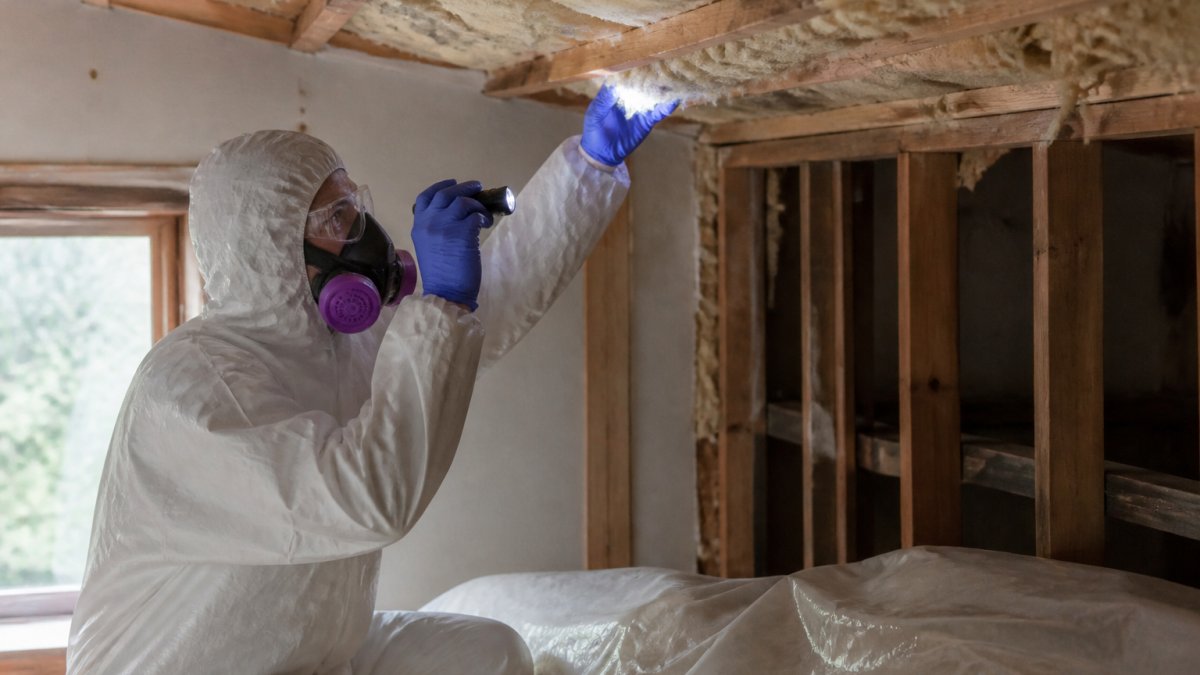
The certified inspector documents all visible building materials, photographs suspect materials, notes their location and condition, and reviews building records to identify high-risk areas.

Step 2: Sample Collection
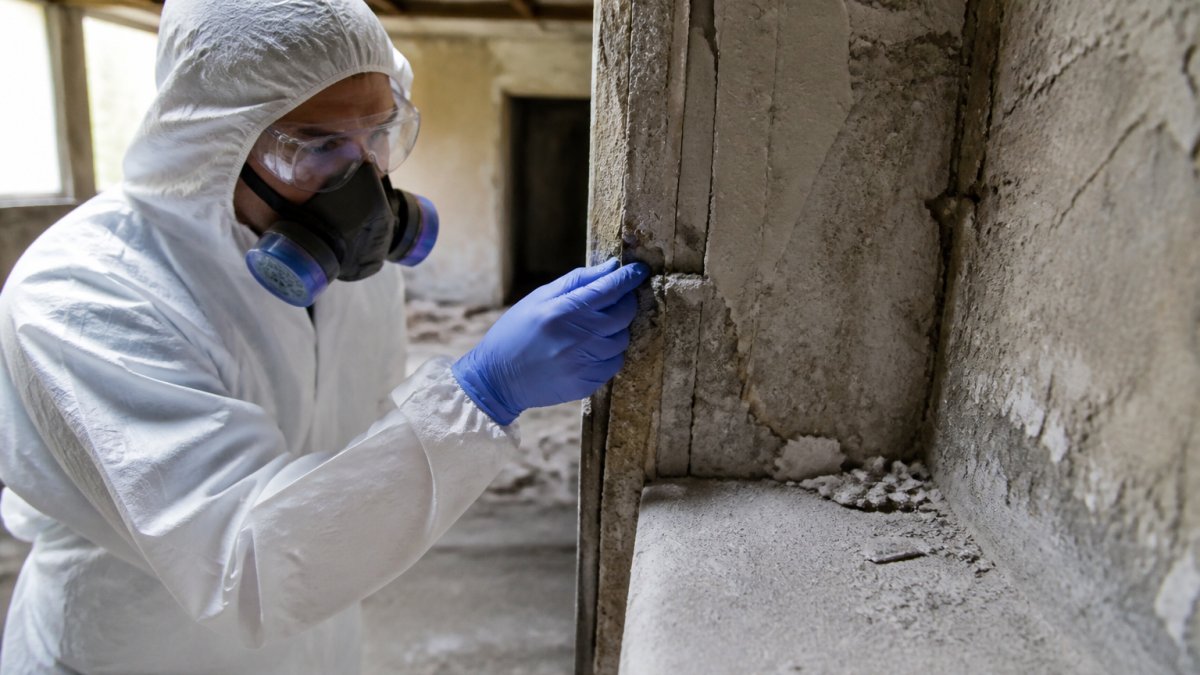
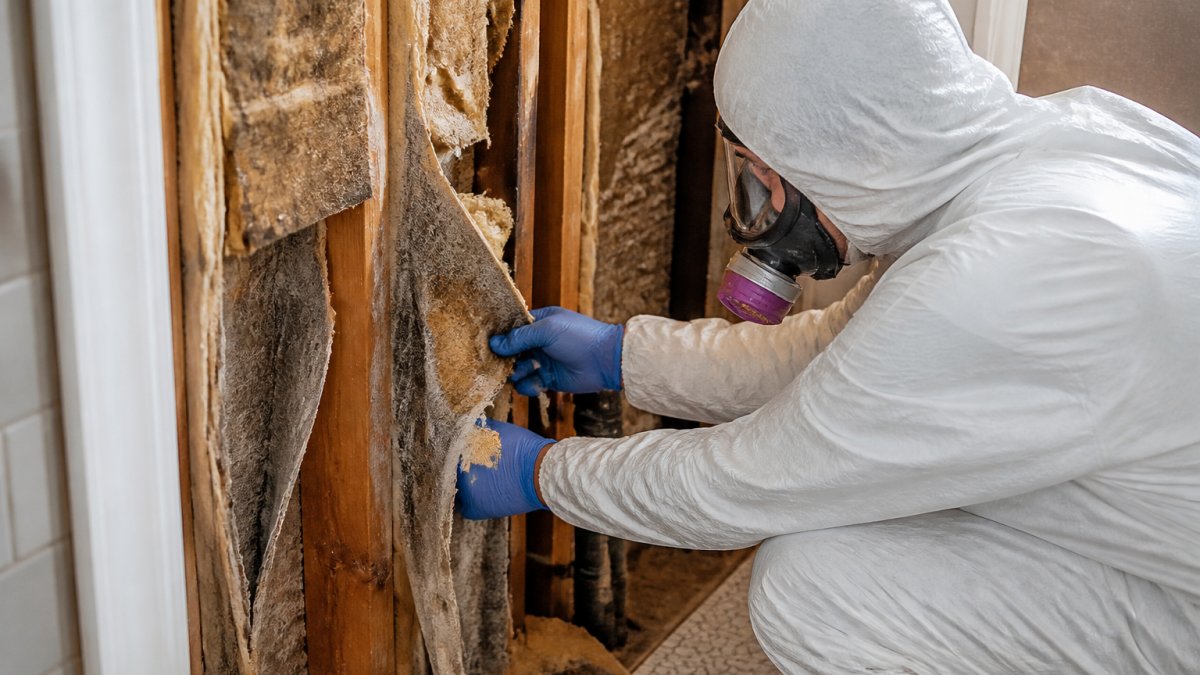
The inspector collects bulk samples (small pieces of material) using controlled techniques to minimize fiber release, wearing full protective equipment. Samples are sealed, labeled, and sent to a certified laboratory.
Step 3: Laboratory Analysis
The lab uses polarized light microscopy (PLM) to identify asbestos fibers, producing a detailed report.
Step 4: Air Testing (When Needed)
If friable materials are found or renovation will disturb materials, air sampling measures airborne fiber concentration.
Step 5: Report and Recommendations
The inspector compiles findings into a comprehensive report identifying every material tested, asbestos findings, and next-step recommendations.
How Much Does Asbestos Testing Cost and What Affects Pricing
Testing costs depend on property size, number of samples, analysis type, material accessibility, and lab turnaround speed.
For current pricing, contact Asbestos Buster directly. Testing costs can prevent expensive surprises, legal liability, and health risks.
What Happens If Asbestos Is Found During Your Renovation
Finding asbestos doesn't mean your renovation stops. It means your renovation changes.
First, you have options. You can encapsulate the material (seal it so fibers don't escape), remove it through licensed abatement contractors, or leave it undisturbed if your renovation doesn't require touching it.
Encapsulation works when the material is in good condition and won't be disturbed. The contractor applies a sealant coating that binds fibers in place. This is cheaper than removal but requires ongoing monitoring.
Abatement (removal) is necessary when renovation will disturb the material or when the material is deteriorating. Licensed asbestos abatement contractors follow strict protocols: containment barriers, negative air pressure, HEPA filtration, and proper disposal as hazardous waste.
Undisturbed materials can sometimes stay in place if your renovation avoids them. For example, if asbestos is found in basement insulation but your renovation is only on the second floor, you may not need to remove it.
Your legal obligations:
Before abatement work begins, you may need to notify your state environmental agency. The contractor must be licensed. Work should follow NESHAP standards. Air clearance testing may be required after abatement. All asbestos waste must be disposed of at a licensed hazardous waste facility.
Failure to follow these steps exposes you to EPA fines and personal liability if someone is harmed.
Your insurance considerations:
Some homeowner policies exclude asbestos-related claims. Others cover abatement costs. Review your policy before testing. If asbestos is found and you proceed with removal, document everything. Keep receipts, lab reports, and clearance certificates.
Finding a Certified Asbestos Tester Near You
Not all inspectors are qualified. Certification matters.
A certified asbestos inspector has completed training, passed exams, and maintains credentials through continuing education. Certification requirements vary. Some states require licenses; others rely on voluntary certification through organizations like the American Board of Industrial Hygienists (ABIH).
What to verify:
State licensing (if required)
Certification credentials (ABIH, NAHI, or equivalent)
Insurance coverage (liability and errors & omissions)
References from recent clients
Red flags to avoid:
Inspectors who also do removal work (conflict of interest)
Inspectors who pressure you toward removal before you've decided
Inspectors with no verifiable credentials
Inspectors who won't provide a detailed written report
Asbestos Buster provides professional asbestos testing before renovation with certified inspectors, clear reporting, and no conflicts of interest. Our team has local expertise in Nassau County and Long Island properties, many of which were built during the peak asbestos era.
DIY vs. Professional Sampling: Why Professional Testing Protects You
Some homeowners consider collecting their own samples to save money. This is dangerous and often illegal.
Why DIY sampling fails:
Collecting asbestos samples without proper training and equipment releases fibers into your home. You expose yourself, your family, and anyone in the building to inhalation risk. You also contaminate the sample, making lab results unreliable.
DIY samples are often rejected by labs because they're improperly collected or labeled. You waste money and time.
Legal and regulatory issues:
Many jurisdictions require that samples be collected by a certified professional. If you collect your own samples and asbestos is found, your documentation may not satisfy regulatory requirements. You could be forced to hire a professional anyway and do the process twice.
If you later sell the property, the buyer's inspector will likely require certified testing. DIY results won't satisfy their requirements.
Professional sampling protects you:
A certified inspector follows chain-of-custody protocols. Samples are labeled, sealed, and tracked from collection to lab analysis. Results are defensible in legal and regulatory contexts.
Professional sampling is also faster and more thorough. An experienced inspector knows where to look and what materials are most likely to contain asbestos. They collect strategic samples that give you complete information without over-sampling.
The protection, accuracy, and legal defensibility that professional testing provides are significant.
Independent asbestos testing before renovation is the foundation of a safe, compliant project. Testing identifies hazards before they become health crises or legal liabilities. It protects your family, your property value, and your peace of mind.
The process is straightforward: hire a certified inspector, collect samples, wait for lab results, and make informed decisions about your renovation based on facts. Asbestos Buster delivers professional inspection, accurate sampling, clear reporting, and expert guidance so you can move forward with confidence.
Step | What Happens | Timeline |
Visual survey | Inspector documents all suspect materials and building history |
|
Sample collection | Certified inspector collects bulk samples in controlled manner |
|
Lab analysis | Microscopic analysis identifies asbestos |
|
Air testing (if needed) | Measures airborne fiber concentration in building |
|
Report and recommendations | Detailed findings and next-step options delivered |
|
Common questions about asbestos testing before renovation:
How do I know you won't find asbestos everywhere just to sell me an expensive removal job?
Independent testing removes that conflict. We collect samples, send them to a certified lab, and report what the lab finds. We don't perform removal work. We have no financial incentive to overstate findings. Our reputation depends on accuracy, not scaring clients into expensive services.
What if I'm buying a property and the seller already had testing done?
The seller's inspector may have conflicts of interest or may have missed areas. An independent inspection gives you confidence in your own due diligence. You can negotiate repairs or price adjustments based on your own testing results.
How long does testing take and when can I get results?
Sample collection takes 1-4 hours depending on property size. Lab analysis takes 5-10 business days. You typically have a complete report within 2-3 weeks.
What does an asbestos lab report actually tell me?
A good report identifies each material tested, whether asbestos was found, the type of asbestos, and the percentage composition. It should be written in plain language, not technical jargon. You should understand it without hiring someone to interpret it.
Is testing really necessary if my building has been fine for 30 years?
Yes. Asbestos doesn't become safe with age. It becomes more dangerous as materials deteriorate and fibers are released. Renovation work accelerates this deterioration. Testing identifies hazards before renovation disturbs materials.
What if I can't afford removal if asbestos is found?
Testing doesn't obligate you to remove asbestos. If materials are in good condition and won't be disturbed, you can leave them in place and avoid that area during renovation. You can also get abatement quotes to understand costs before committing to removal.
Frequently Asked Questions
How do professionals test a home for asbestos?
Professional inspectors collect bulk samples from suspect materials using specialized equipment and containment protocols. Samples are then sent to a laboratory for microscopic analysis using polarized light microscopy (PLM) or transmission electron microscopy (TEM). The inspector may also conduct air quality testing or settled dust sampling depending on your renovation scope. Results are documented in a detailed survey report identifying any asbestos-containing materials (ACM) found and their location, condition, and friability status.
Why should I hire an independent asbestos tester near me instead of using my contractor's inspector?
An independent certified inspector has no financial stake in the renovation outcome or removal costs, ensuring unbiased sampling and reporting. Contractors or removal companies may have conflicts of interest that influence their recommendations. Independent testing provides third-party documentation for regulatory compliance, insurance purposes, and property transactions. A certified professional inspector follows strict sampling protocols and delivers clear, defensible lab results you can trust.
What happens if asbestos is found during renovation planning?
If asbestos is detected, your inspector will document the material type, location, and condition in the survey report. Friable materials (easily crumbled) require professional abatement before disturbance. Non-friable materials may be encapsulated or removed depending on your renovation scope and local regulations. You'll need to hire a licensed abatement contractor, obtain any required permits, and follow containment and hazardous waste disposal protocols.
How much does asbestos testing cost for my renovation project?
Testing costs depend on property size, number of samples collected, material types being tested, and the laboratory analysis method required (PLM vs. TEM). Air quality testing and settled dust sampling add to the total. For an accurate quote tailored to your specific property and renovation scope, contact a local certified inspector who can assess your needs.
Schedule an Inspection
Comments