
Asbestos Survey for Demolition Contractors: 2026 Guide
Table of Contents
Why Demolition Contractors Need an Asbestos Survey
What a Pre-Demolition Asbestos Survey Covers
Inspection, Sampling, and Laboratory Analysis
Asbestos Survey Checklist for the Bidding Stage
How to Review an Asbestos Survey Report
Red Flags in an Incomplete Report
What Drives Asbestos Survey Cost
When the Survey Misses Something: Unexpected ACMs
Contractor Workflow From Pre-Bid to Site Clearance
Conclusion
Frequently Asked Questions
Last Updated: October 17, 2026
Why Demolition Contractors Need an Asbestos Survey
An asbestos survey for demolition contractors is a documented inspection that finds asbestos-containing materials before a structure comes down. Federal rules treat demolition as a trigger for a full inspection, not an optional add-on. Skip it and the project stops.
The EPA asbestos demolition and renovation requirements are blunt: a thorough inspection must happen before work begins. Asbestos Buster sees the fallout regularly. Crews start tearing out walls, find suspect pipe wrap, and the job freezes on the spot.
Here's what most guides get wrong: they treat the survey as paperwork. It's really a risk transfer document. It tells you what to price, what to protect, and what to remove before the excavator shows up.
Watch Out Starting demolition before the survey is complete can trigger a stop-work order, fines, and a re-inspection bill. The schedule hit usually costs more than the survey itself.
What a Pre-Demolition Asbestos Survey Covers
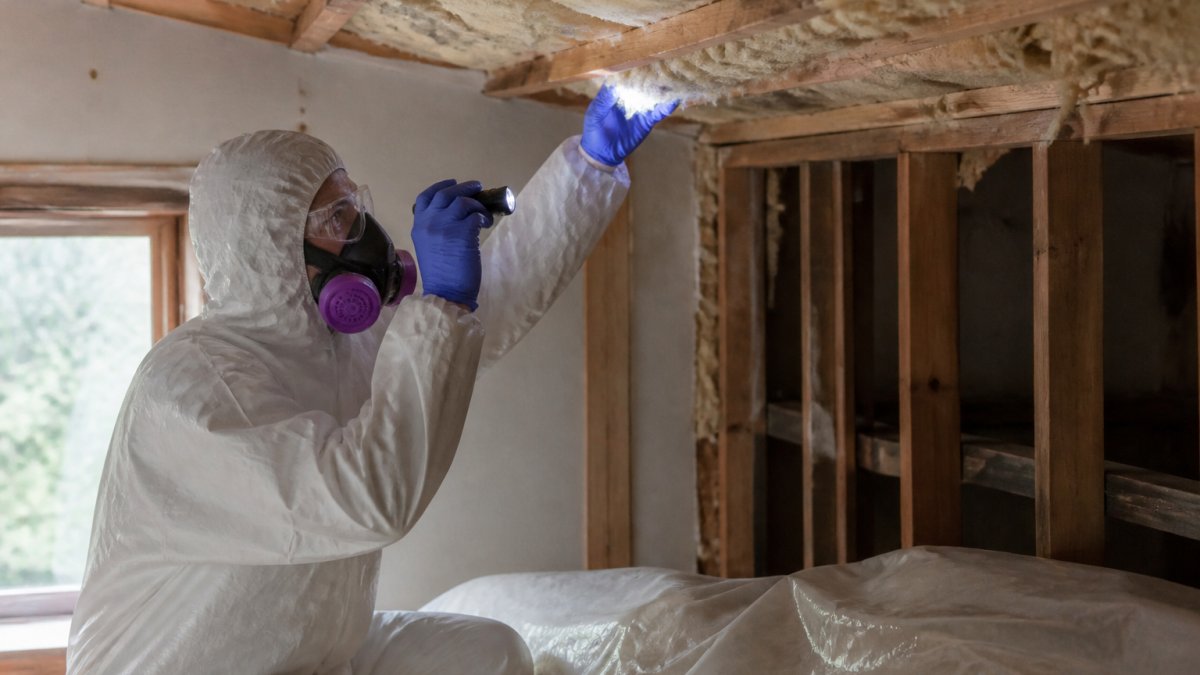
A pre-demolition asbestos survey covers every material that will be disturbed, from pipe insulation to floor tile to roofing felt. The inspector documents condition, location, and quantity. Then samples go to a lab.
The survey is not a quick walkthrough. It's a systematic sweep of the whole structure, including areas most people forget:
Boiler and pipe insulation
Floor tile and mastic
Ceiling tiles and spray-on coatings
Roofing and siding
Joint compound and drywall mud
Gaskets, packing, and duct sealant
Transite panels and cement products

Inspection, Sampling, and Laboratory Analysis
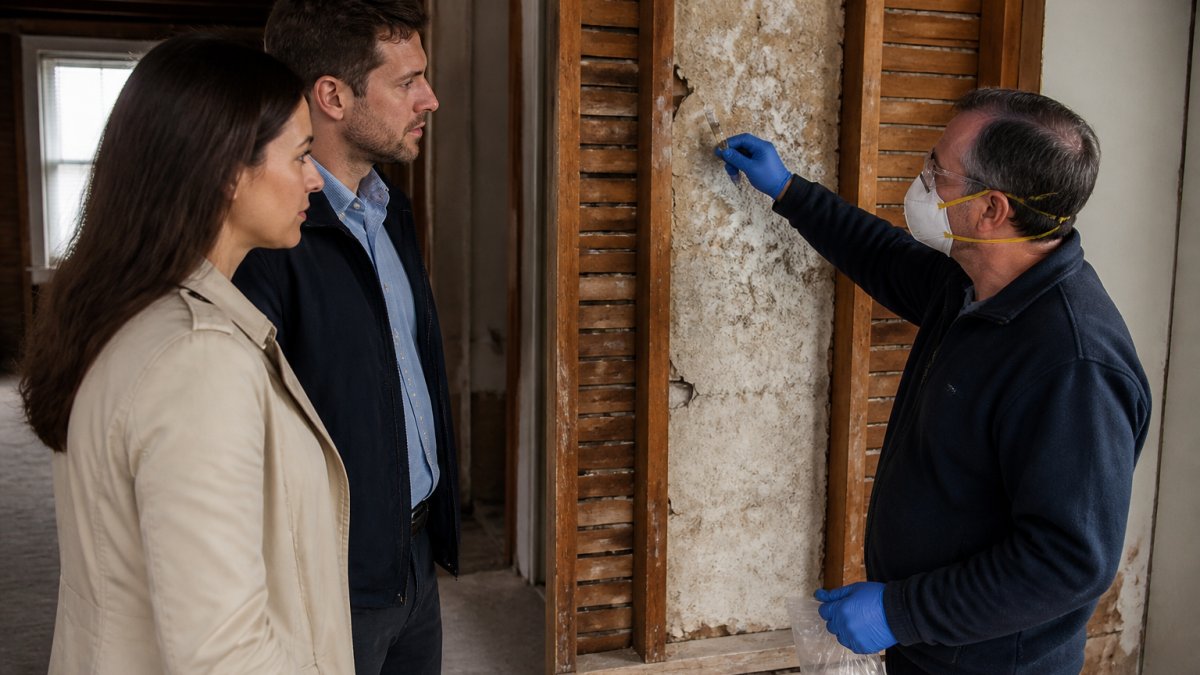
The inspection phase identifies suspect materials. Sampling follows, and each sample goes to an accredited lab for analysis. Results come back as positive or negative, often with a percentage of asbestos content.
The report should list every sample, its location, and the lab result. A good survey also notes materials that were assumed positive rather than sampled. That distinction matters at bid time.
Asbestos Survey Checklist for the Bidding Stage
A solid asbestos survey checklist at bid stage keeps you from eating costs later. Use it to confirm the report is complete before you price the job.
Was the full structure inspected, including crawl spaces and mechanical rooms?
Are sample locations and lab results listed?
Are assumed-positive materials flagged?
Is the quantity of each ACM estimated?
Are inaccessible areas noted?
Is the inspector's certification documented?
Is the report dated and signed?
A common mistake is bidding off a one-page summary. The full report is what protects you.
How to Review an Asbestos Survey Report
Reviewing an asbestos survey report means testing it against the demolition scope, not just reading it. The report is only suitable for your project if it covers every material the demolition will disturb, in every area the crew will enter. Most contractors skim the summary page and miss the limitations section, which is exactly where the report tells you what it did not inspect.
Start with building coverage. Compare the report's area list against your demolition drawings. Every room, chase, crawl space, mechanical room, roof section, and exterior elevation that will be disturbed should appear. If the report is silent on an area, treat it as uninspected, not clean.
Next, check sample adequacy. For each suspect homogeneous material, confirm the report lists sample locations and lab results. A material described only as 'assumed positive' is a pricing assumption, not a finding, flag it and price it as ACM until proven otherwise. Look for the lab's accreditation and the analysis method (polarized light microscopy is standard for bulk samples).
Then read the limitations and inaccessible-area notes. A report that excludes pipe chases, wall cavities, or below-grade spaces is telling you where unexpected ACMs are most likely to surface. Those exclusions belong in your bid assumptions and your contract's unexpected-ACM clause.
Finally, confirm the report is usable for the planned scope. It should be dated, signed, and prepared by an accredited inspector, and it should estimate quantities of each ACM, quantities drive abatement and disposal pricing. A report without quantities forces you to estimate, and estimates become disputes.
Red Flags in an Incomplete Report
Watch for these warning signs:
No lab results attached, or results without sample locations
Vague material descriptions ('miscellaneous debris')
No mention of inaccessible areas or limitations
No inspector credentials or lab accreditation
Quantities missing or clearly underestimated
No distinction between sampled and assumed-positive materials
Any of these means you need a second look before bidding. A report that fails two or more of these checks is not a reliable basis for a demolition bid.
Pro Tip Photograph every material the report lists during your site walk, and note the report page and sample number for each. If an ACM shows up later that wasn't documented, your photos and annotations are your proof for a change order.
A validated report does more than satisfy the regulator, it becomes the pricing basis for abatement, the scope document for the site supervisor, and the evidence file if the owner disputes a change order. Treat the review as a bid-stage deliverable, not a formality.
What Drives Asbestos Survey Cost
Asbestos survey cost is not a flat rate, it is a function of how many suspect materials exist, how many samples the lab must analyze, and how hard the building is to inspect. Contractors who understand the cost structure can budget the survey line accurately at bid time instead of treating it as a lump-sum guess.
The dominant cost driver is sample count. Under EPA asbestos inspection requirements, an accredited inspector must collect samples of each suspect homogeneous material, and lab analysis is billed per sample. A small commercial building with a handful of suspect materials may need a few dozen samples; a large industrial structure with pipe insulation, transite, gaskets, and multiple flooring systems can require well over a hundred. Each sample carries a lab fee, and the inspection labor scales with the number of materials and the time needed to access them.
Access difficulty is the second driver. Confined spaces, mechanical chases, roofs, and areas behind finished surfaces require more time and sometimes specialized access equipment. A survey that looks cheap on paper often assumes easy access, confirm the scope states how inaccessible areas will be handled, because that assumption is where bids go sideways.
Turnaround time is the third. Standard lab turnaround is priced lower than rush analysis. If your demolition schedule compresses the survey window, expect a premium for expedited results.
A practical way to budget the survey line is to request a written scope that itemizes:
Number of suspect materials to be sampled
Estimated sample count and per-sample lab fee
Access assumptions and any exclusions
Turnaround time and rush premium, if any
Whether assumed-positive materials will be documented
Get the quote in writing and confirm what is included. A cheap survey that misses materials costs more in the end, the abatement change order and schedule hit almost always exceed the difference between a thorough survey and a cut-rate one. Build the survey cost into the bid as a distinct line item, not buried in general conditions, so the owner sees what compliance actually costs and you have documentation if the scope changes.
When the Survey Misses Something: Unexpected ACMs
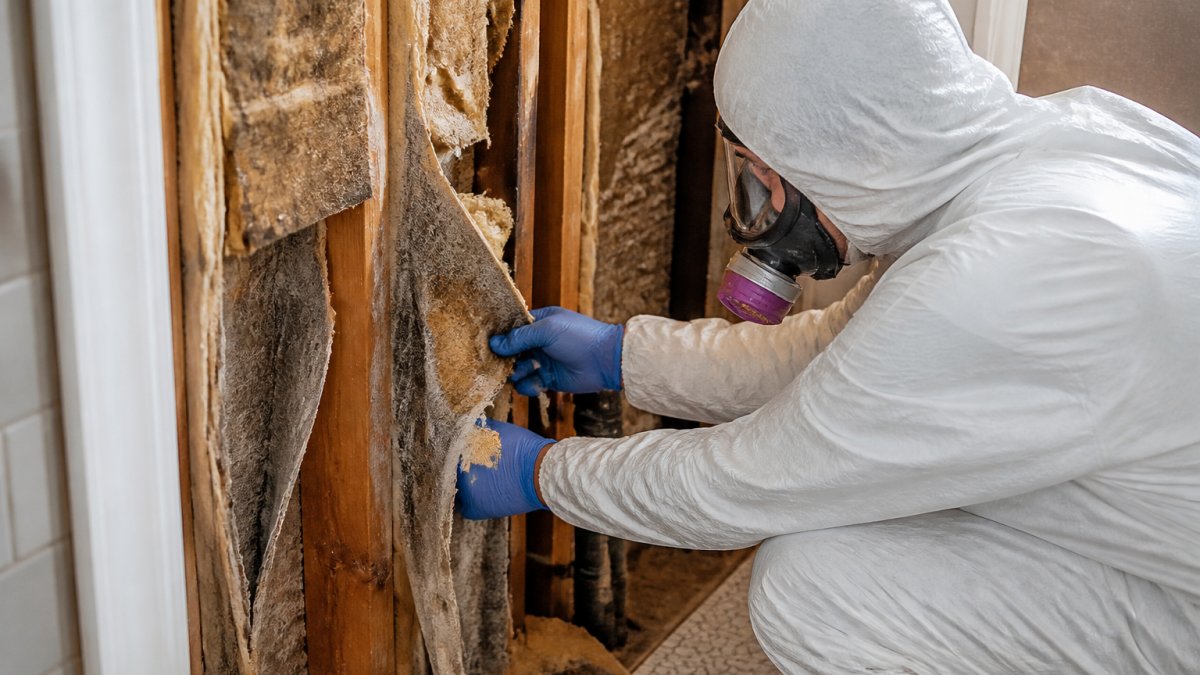
Finding unexpected asbestos mid-demolition is common, especially in older buildings. The fix is a documented stop, not a workaround.
When a crew hits suspect material not on the report:
Stop work in that area immediately.
Keep workers and occupants clear.
Notify the project owner and the survey provider.
Get the material sampled and analyzed.
Adjust the scope and issue a change order.
The OSHA asbestos standards for construction require worker protection whenever asbestos is disturbed. That applies even when the survey missed it.
This is where a clear contract saves you. Build a clause for unexpected ACMs into every bid.
Contractor Workflow From Pre-Bid to Site Clearance
A contractor workflow keeps the survey connected to the job, from first bid to final clearance. Here's the sequence that works:
Stage | Action | Who Owns It |
Pre-bid | Obtain and review the survey report | Estimator |
Bid | Price abatement and disposal in scope | Estimator |
Contract | Add unexpected-ACM clause | Project manager |
Pre-work | Notify authorities as required | Compliance lead |
Demolition | Stop work on any undocumented ACM | Site supervisor |
Clearance | Confirm abatement and disposal records | Project manager |
The survey report should travel with the project file. Hand it to the site supervisor, not just the office. When questions come up in the field, the report answers them.
Key Takeaway The survey is only useful if the crew on site has it. Keep a copy in the trailer and one in the project file.
Conclusion
Demolition work moves fast, and asbestos surprises stall it faster. A complete survey, a careful review, and a contract that covers the unexpected keep the job moving. Asbestos Buster provides professional inspection and testing for contractors across Nassau County and Long Island, with clear reporting and sampling that supports bulk, air, TEM, settled dust, vermiculite, and soil testing. Schedule an inspection with Asbestos Buster and start demolition with documentation you can trust.
Frequently Asked Questions
How do you do an asbestos survey before demolition?
A certified inspector walks the structure room by room, inventories suspect building materials, and collects samples of each distinct material type for laboratory analysis. The survey documents friable and non-friable asbestos, inaccessible areas, and quantities, then compiles an asbestos survey report. Contractors should provide site access, prior renovation records, and the demolition scope so the inspector can target likely ACMs.
Can demolition begin before asbestos survey results are available?
No. Demolition should not start until the asbestos survey report is complete and any identified asbestos-containing materials are removed or abated under the applicable federal, state, and local requirements. Starting early risks worker exposure, compliance violations, project delays, and contaminated debris that cannot be disposed of at a standard waste site.
What should a demolition contractor do if asbestos is found mid-project?
Stop work in the affected area, restrict access, and notify the building owner and your asbestos consultant. Have the unexpected material sampled and added to the survey report, then plan abatement with containment, personal protective equipment, air monitoring, and final air clearance before demolition resumes. Document everything for a change order and regulatory notification.
What drives asbestos survey cost for a demolition project?
Asbestos survey cost depends on building size, number of distinct materials sampled, number of stories, accessibility, and whether air, soil, or vermiculite testing is needed. Pricing also varies with turnaround time and laboratory fees. Request a written scope and quote from your inspector rather than relying on a per-square-foot estimate, since hidden materials and access constraints change the work.
Schedule an Inspection
Comments