
Avoiding Bias in Asbestos Inspections: A Step-by-Step Guide
Table of Contents
Why Bias Matters in Asbestos Inspections
How to Choose an Asbestos Inspector
Verify Accreditation and Independence
Confirm Separation from Abatement Services
How Compensation Structure Shapes Findings
Blind Sample Labeling and Lab Independence
A Practical Screening Script
What to Put in the Engagement Letter
Questions to Ask an Asbestos Testing Company
Asbestos Inspector vs. Abatement Contractor: Know the Difference
Your Asbestos Inspection Checklist
Before the Inspection
During the Inspection
After You Receive Results
Evaluating Your Inspection Report for Impartiality
A Report Audit Checklist
Understanding False Negatives and Sampling Limits
When You Disagree with the Findings
What Transparent Reporting Looks Like
Frequently Asked Questions
Last Updated: October 13, 2026
Why Bias Matters in Asbestos Inspections
Avoiding bias in asbestos inspections is essential, as bias leads to costly mistakes.
Asbestos-containing materials (ACM) pose real health risks, but so do unnecessary removal costs. Property managers, homeowners, and contractors need reliable data for renovation, demolition, or occupancy decisions.
At Asbestos Buster, we focus on impartial assessment and clear reporting, starting with where bias creeps in and how to eliminate it.
How to Choose an Asbestos Inspector
Choosing the right inspector is your first defense against bias. Understand the mechanisms that produce it, then structure the engagement so they can't operate.
Verify Accreditation and Independence
An accredited inspector has completed an EPA-approved asbestos inspector course and passed an exam, and many states add licensing on top (the EPA). Accreditation establishes competence, not impartiality.
Independence is the real test, with three parts:
Financial independence. Does the inspector or their firm earn revenue from abatement, encapsulation, or removal? If yes, they have a direct financial stake in what the samples show.
Analytical independence. Does the inspector use an in-house lab, or one they own or share ownership with? A captive lab is a quieter conflict than a captive abatement arm, but still a conflict.
Referral independence. Does the inspector receive referral fees, commissions, or volume discounts from a particular abatement contractor? Ask directly.
The cleanest arrangement separates inspection from remediation entirely: the inspector identifies and documents, someone else handles removal or containment. This removes the incentive to bias results in either direction.
Confirm Separation from Abatement Services
If a company offers both inspection and abatement, request a different team for your inspection than the one that would handle removal, or better, hire the inspector and abatement contractor separately. Some companies maintain separate divisions with firewalls, but cross-selling remains an incentive. The safest path: hire an independent inspection firm with no abatement arm.
How Compensation Structure Shapes Findings
Bias in asbestos inspections rarely looks like fraud; it usually looks like ordinary professional incentives working quietly in the background. Three fee structures matter:
Flat fee for a defined scope. The inspector is paid the same whether they find asbestos or not. This is the least bias-prone structure and the one to prefer.
Fee tied to sample count. The inspector is paid per sample, which can encourage oversampling, especially in small buildings where a proportionate plan would call for fewer samples.
Fee tied to project scope or abatement value. The inspector's fee scales with the size of the remediation project. This is the most bias-prone structure and should be avoided when possible.
Ask for the fee structure in writing before the inspection begins. An estimate tying compensation to a defined scope, not findings, is a meaningful safeguard.
Blind Sample Labeling and Lab Independence
Bias can enter after the inspector leaves the building. If the lab analyst knows which samples came from which property, or which the inspector suspects are positive, that context can influence borderline calls.
Two safeguards reduce this risk:
Blind labeling. Samples are submitted to the lab with coded identifiers rather than addresses or material descriptions. The analyst sees a sample number, not "3rd floor pipe insulation from the Smith building." This removes contextual cues that can nudge a borderline result.
Independent, accredited labs. The lab should hold accreditation for the specific analysis method being used (PLM, TEM, or both) and have no ownership or financial relationship with the inspection firm. Ask for the lab's name and accreditation before the inspection, not after.
Neither safeguard is universal, many reputable inspectors skip blind labeling on routine residential work. On larger commercial projects, or where results may be disputed, requesting it explicitly can be beneficial.
A Practical Screening Script
A few questions when you call an inspection firm tell you most of what you need:
"Do you or your company perform abatement or removal work?", A yes is not disqualifying, but it changes how you should structure the engagement.
"Which laboratory analyzes your samples, and do you have any ownership interest in it?", You want a named, independent, accredited lab.
"How is your fee calculated, flat scope, per sample, or tied to project size?", Flat scope is the cleanest.
"Will samples be submitted with blind labels?", A yes is a strong signal of quality control discipline.
"Can you provide two references from projects where asbestos was not found?", This is the question most property owners never ask, and it's the one that best separates inspectors who report accurately from inspectors who report what sells.
Pro Tip If an inspector hesitates on any of these questions, that hesitation is itself information. A confident, independent inspector will answer all five.
What to Put in the Engagement Letter
Before work begins, ask for a short written engagement letter stating:
The inspector's accreditation and license numbers
The laboratory's name and accreditation
The fee structure and what it covers
This is your reference point if the report later raises questions, and it signals that you are paying attention, one of the most effective bias-reduction tools available.
Questions to Ask an Asbestos Testing Company
Before hiring, ask these questions to assess whether the testing company operates with integrity.
On sampling strategy and scope:
How many samples will you collect, and why that number?
Will you sample suspect materials, or do a comprehensive survey of the entire building?
How do you decide which areas are accessible for sampling?
On lab selection and quality:
Which lab analyzes your samples?
Is the lab independent of your company?
Do you use polarized light microscopy (PLM), transmission electron microscopy (TEM), or both?
On reporting and conflicts:
Will you provide a written report with clear findings and recommendations?
If asbestos is found, do you perform abatement, or do you refer clients to other contractors?
Can you provide references from recent clients?
On methodology:
Do you collect blind samples to reduce analyst bias?
How do you maintain chain of custody for samples?
What threshold do you use to report asbestos concentration (typically one percent)?
The answers reveal whether the company prioritizes accuracy or profit. Rushed sampling, a captive lab, or an immediate pitch for their own abatement services are red flags.
Asbestos Inspector vs. Abatement Contractor: Know the Difference
These are fundamentally different roles with different incentives. Confusing them is a common mistake.
An asbestos inspector identifies and documents suspect materials: collecting samples, arranging lab analysis, and producing a report.
An abatement contractor removes, encapsulates, or contains asbestos-containing materials under strict regulatory protocols.
The solution: hire them separately. Let the inspector do the detective work, then get competitive bids from abatement contractors if removal or containment is needed.
Your Asbestos Inspection Checklist
A structured inspection reduces the chance of oversight or bias. Use this checklist to cover the essential steps and maintain impartiality.
Before the Inspection
Confirm the inspector is accredited and independent of any abatement company
Request a written sampling plan detailing which areas will be sampled and why
Identify all building areas accessible during the inspection
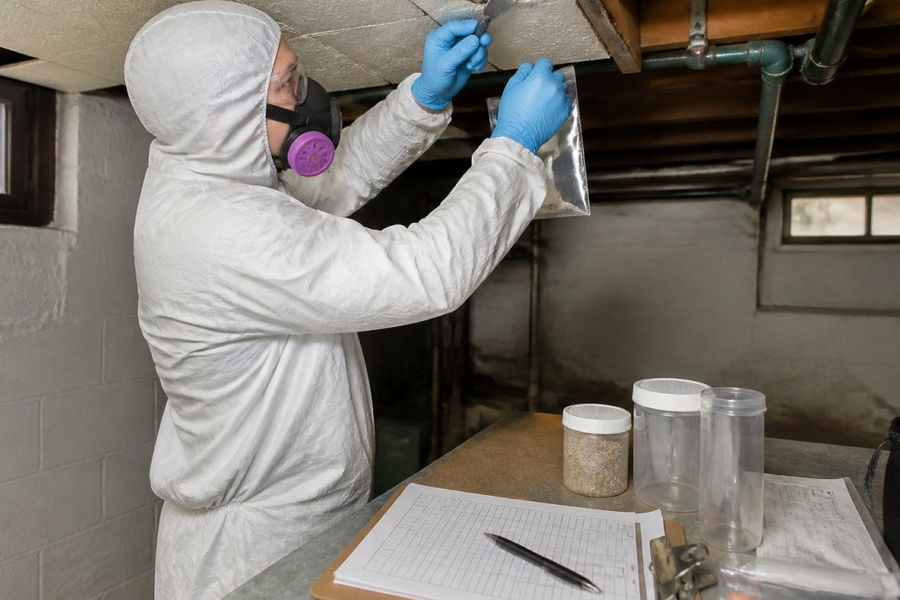
During the Inspection
Observe the inspector's methodology for selecting sample locations
Ask why specific areas are being sampled
Confirm samples are labeled with location, date, and time
After You Receive Results
Review the lab report for completeness and clarity
Confirm the lab used appropriate analysis methods (PLM, TEM, or both)
Check that all samples are listed with results and asbestos concentration levels
Evaluating Your Inspection Report for Impartiality
The report is your window into whether the inspection was conducted fairly. You need a repeatable way to audit it, understand what it can and cannot tell you, and resolve disagreement without disturbing materials or relying on a single assessment.
A Report Audit Checklist
Work through the report in this order, each item is verifiable without re-inspecting the building.
1. Scope and exclusions. Does the report state exactly which areas were inspected and which were not?
**2.
**3.
**4.
**5.
**6.
**7.
**8.
9. Recommendations. The report may note that asbestos-containing materials require proper handling.
10. Independence statement. A short statement confirming the inspector has no financial stake in the abatement decision is a low-cost, high-signal addition.
Understanding False Negatives and Sampling Limits
A report saying "no asbestos detected" is not the same as "no asbestos present." Two limitations matter:
Sampling is representative, not exhaustive. An inspector samples a subset and generalizes. If a homogeneous area was misidentified, say, two visually similar tiles from different eras treated as one, a positive result in one can mask a negative in the other, or vice versa.
Some materials are harder to call. Vermiculite insulation, certain floor tiles, and some textured coatings can produce borderline PLM results; TEM analysis or a second lab opinion is a reasonable next step.
A well-written report states its confidence level and flags samples close to the threshold. If yours doesn't, asking the inspector directly: "Which of these results were borderline, and how confident are you in each?" can be beneficial.
Watch Out A negative result on a single sample of a material that appears in multiple locations is not a clean bill of health for the whole building. Confirm that the sampling plan covered each distinct homogeneous area, not just one representative spot.
When You Disagree with the Findings
Disagreement is normal, especially on borderline materials. Resolve it without disturbing materials unnecessarily or defaulting to whoever shouts loudest.
A neutral process looks like this:
Ask the original inspector for clarification in writing. Request the lab data, sampling plan, and an explanation of borderline calls. Many disputes resolve here.
Request a re-analysis of retained samples. Accredited labs typically retain sample material after analysis, so a different lab can confirm or challenge the original result without new disturbance to the building.
Commission an independent second inspection if the dispute is material. Use a different firm with no relationship to the first, specify blind labeling and an independent lab, and compare the reports using the audit checklist above.
If the two reports conflict, treat the conflict as data. Conflicting results usually point to a misidentified homogeneous area, a borderline sample, or a difference in sampling scope, identifying which tells you what to do next.
Do not let either inspector pressure you into immediate abatement. Abatement decisions belong to the property owner, informed by the results. A second opinion is almost always cheaper than unnecessary removal.
What Transparent Reporting Looks Like
A credible report includes:
Clear methodology. How samples were selected, collected, and analyzed; the lab's name, accreditation, and analysis method.
Specific results. Each sample listed with location, material type, and asbestos concentration as a percentage, against a consistent threshold.
Honest limitations. Named inaccessible areas, acknowledged uncertainty, and a note on false-negative risk where relevant.
Key Takeaway You don't need to be a microscopist to evaluate an inspection report. You need to check scope, sampling logic, lab independence, and limitations. If any of those four is missing or vague, asking for it in writing before you act on the findings can be beneficial.
Frequently Asked Questions
How can I tell whether an asbestos inspector is independent?
An independent inspector does not offer abatement, removal, or remediation services. Verify they hold current AHERA accreditation or equivalent state certification, carry liability insurance, and have no financial interest in finding or not finding asbestos. Ask directly: 'Do you perform abatement work or refer clients to specific contractors?' and request references from property owners, not contractors.
Should the inspector and asbestos removal contractor be separate?
Yes, absolutely. Separation prevents conflicts of interest. An inspector who profits from abatement recommendations has incentive to over-sample or exaggerate findings. A qualified accredited inspector should only inspect, sample, and report. Once results are known, you hire a separate licensed abatement contractor. This protects you and ensures the inspection scope reflects actual risk, not profit potential.
What should an asbestos inspection report include?
A complete report must list all suspect materials by location, homogeneous area, and visual condition. It should include sample identification numbers, chain-of-custody documentation, laboratory analysis results (PLM or TEM method), asbestos concentration percentages, and comparison to the one percent threshold. The report must state whether materials are friable or non-friable, accessible or inaccessible, and include recommendations for further action. It should not recommend specific contractors or abatement companies.
What is the best practice for avoiding asbestos exposure during an inspection?
The inspector should not disturb suspect materials unnecessarily. Bulk samples must be collected carefully using proper technique to minimize fiber release. The inspector should follow a documented sampling plan, use chain-of-custody procedures, and wear appropriate protective equipment. Occupants should be notified before sampling begins and advised to leave the area during collection. All samples should be sealed and labeled immediately.
Schedule an Inspection
Comments