
What Happens After Asbestos Is Found: 2026 Steps
Table of Contents
Step 1: Stop Work and Contain the Area Immediately
Your First-Hour Containment Checklist
Friable vs. Non-Friable: Why the Distinction Changes Everything
What Happens After Asbestos Is Found: The Professional Inspection and Testing Process
How Long Does Asbestos Testing Turnaround Time Take?
The Asbestos Abatement Process, Step by Step
How Long Does Abatement Take?
What Happens to the Waste
What Clearance Testing Actually Measures
Red Flags During Abatement
Is Asbestos Removal Mandatory? Federal and State Rules Explained
How to Vet an Asbestos Remediation Contractor
Paying for Abatement: Insurance, Assistance, and Property Value
What Drives the Cost
Does Homeowners Insurance Cover Asbestos Removal?
Assistance Programs and Grants
Negotiating in a Real Estate Transaction
How Abatement Affects Property Value
Health Risks and When to See a Doctor
Frequently Asked Questions
Last Updated: September 29, 2026
Step 1: Stop Work and Contain the Area Immediately
Finding asbestos during a renovation is not a crisis if you act correctly after asbestos found in the first hour. The moment you suspect asbestos-containing materials, stop all work and keep everyone out of the area to prevent the release of airborne fibers that cause serious respiratory diseases.
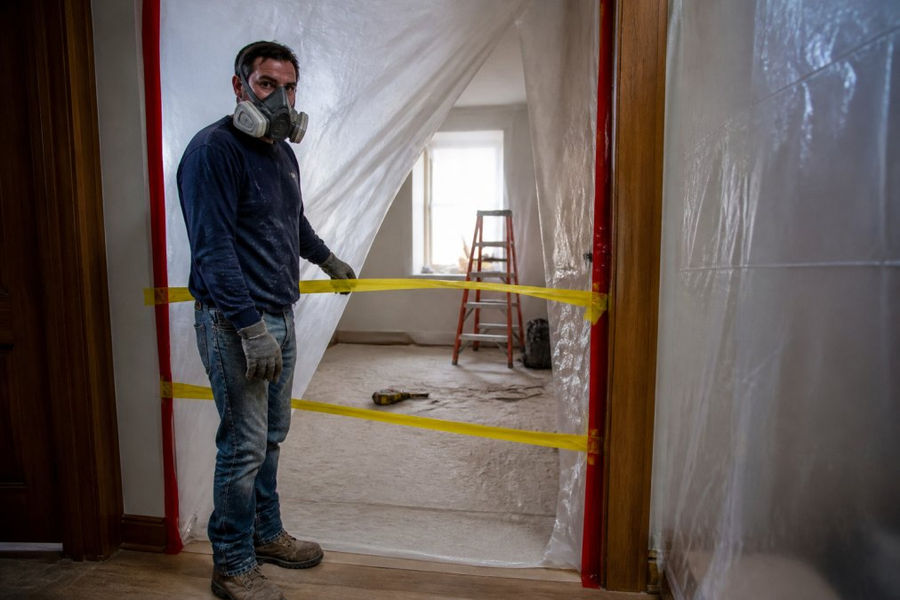
Your First-Hour Containment Checklist
Stop all work and tell everyone to leave the area
Shut off HVAC systems and fans to limit air movement
Seal the doorway with plastic sheeting and tape
Post a warning sign so no one enters
Do not sweep, vacuum, or bag any debris
Change clothes and shower if you touched the material
Call a licensed inspector for testing
Watch Out Never use a shop vac or broom on suspected asbestos. Standard vacuums blow microscopic fibers back into the air, spreading contamination through your whole home.
Friable vs. Non-Friable: Why the Distinction Changes Everything
Friable asbestos crumbles or turns to powder when touched; non-friable asbestos is bound tightly in cement, vinyl, or adhesive and stays intact unless cut or sanded. Friable materials release fibers easily and demand immediate containment and professional abatement. Non-friable materials are lower risk while undisturbed, but sawing, drilling, or demolition turns them friable fast.
Material Type | Example | Risk Level | Action Needed |
Friable | Pipe insulation, spray-on ceiling texture | High | Immediate professional abatement |
Non-friable | Vinyl floor tile, cement siding | Lower if intact | Testing before any disturbance |
Non-friable (damaged) | Broken tile, sanded joint compound | High | Treat as friable |
What Happens After Asbestos Is Found: The Professional Inspection and Testing Process
A licensed inspector confirms the material, maps its extent, and documents everything for your records, separating guesswork from a real plan.
The process follows a clear path:
Site assessment, the inspector walks the property and notes suspect materials
Sampling, small sections are cut and sealed for lab analysis
Lab testing, samples are examined under a microscope for fiber type
Reporting, you receive a written report with findings and recommendations
How Long Does Asbestos Testing Turnaround Time Take?
Most lab results come back within a few business days, though asbestos testing turnaround time depends on the lab and sample type. Rush options exist for contractors on a tight demolition schedule, so ask about turnaround before you book.
The Asbestos Abatement Process, Step by Step
The asbestos abatement process is a controlled removal governed by strict containment, handling, and disposal rules. Understanding what each stage does helps you evaluate a contractor's bid and spot corners being cut.
A typical abatement follows these stages:
Notification and permitting. Before work begins, the contractor files required notifications with federal and state agencies. Under the National Emission Standards for Hazardous Air Pollutants (NESHAP), many renovation and demolition projects must notify regulators before disturbing regulated asbestos-containing material (the EPA). Skipping this step is one of the fastest ways to trigger fines.
Containment. The work area is sealed with plastic sheeting, and critical barriers isolate HVAC vents, doorways, and openings to keep fibers from migrating into occupied space.
Negative air pressure. HEPA-filtered air scrubbers pull air out of the containment, keeping the work zone under negative pressure so air flows in, not out, and airborne fibers stay trapped.
Personal protective equipment (PPE). Workers wear fitted respirators and disposable coveralls; the fit matters more than the brand, since a poor seal defeats the purpose.
Wet removal. Material is wetted before and during removal to suppress fiber release, then bagged in labeled, sealed containers.
Decontamination. Workers pass through a decontamination unit, often a three-stage setup (clean room, shower, equipment room), before leaving the containment. The site itself is cleaned with HEPA vacuums and wet methods.
Clearance testing. After containment comes down, an independent air quality test confirms fiber levels are below the clearance threshold, the step that proves the job is actually done. Skipping any stage puts the whole building at risk.
How Long Does Abatement Take?
Timelines vary with the size and type of material. A small residential job, such as pipe insulation in a single utility room, can wrap up in a day or two. Larger projects, like popcorn ceiling removal across a whole floor or commercial duct insulation, can run a week or more. Clearance testing alone usually adds at least a day because air samples need to be collected and analyzed.
What Happens to the Waste
Removed material is not ordinary trash. It is packaged as regulated waste and transported to a permitted facility, governed by federal NESHAP rules. Ask for the waste manifest, which documents the chain of custody from your property to the disposal site.
Pro Tip Ask to see the waste manifest. It proves the material went to a licensed hazardous waste facility instead of a regular dumpster.
What Clearance Testing Actually Measures
Clearance testing is not a visual inspection. It uses air sampling, often with transmission electron microscopy (TEM) or phase contrast microscopy (PCM), to count fibers, compared against a clearance standard. If the sample fails, the contractor must re-clean and re-test before the area can be reoccupied.
Red Flags During Abatement
No visible containment or critical barriers
Workers without fitted respirators or disposable suits
No negative air machines or HEPA filtration running
Debris being swept, dry-swept, or placed in unlabeled bags
No clearance testing scheduled or offered
No documentation of notifications or waste manifests
If you see any of these, stop the work and get a second opinion. The cost of a redo is far higher than the cost of doing it right the first time.
Is Asbestos Removal Mandatory? Federal and State Rules Explained
Removal is not always required, but disturbing asbestos without following the rules is illegal. The answer to "is asbestos removal mandatory" depends on the material's condition and your project.
In practice:
Intact, undisturbed asbestos can sometimes stay in place
Any project that will disturb it triggers regulatory compliance rules
Landlords and commercial property managers carry extra duties
Pre-demolition surveys are often required before a permit is issued
How to Vet an Asbestos Remediation Contractor
Hiring the wrong contractor is the most expensive mistake in this process. A cheap bid often means skipped containment, poor PPE, and fibers left behind.
Use this checklist before you sign anything:
Confirm the contractor is licensed for asbestos abatement
Ask for proof of insurance and worker certifications
Request references from similar local projects
Get a written scope that names containment and clearance testing
Confirm they file the required notifications with regulators
Ask who performs the final air quality testing
Never accept a bid that skips clearance testing
Paying for Abatement: Insurance, Assistance, and Property Value
Cost varies widely, but "it depends" is not useful when you are staring at a bid. Here is what actually drives the number and where the money can come from.
What Drives the Cost
Abatement pricing is not a flat rate per square foot. The main cost drivers:
Material type. Friable material such as pipe insulation or spray-on ceiling texture is more expensive to remove than non-friable material like vinyl floor tile, because it requires more containment and care.
Square footage and accessibility. Material tucked behind walls, above ceilings, or in crawl spaces takes longer to reach and contain.
Containment complexity. A single sealed room is cheaper than a multi-room or multi-floor containment with long negative air runs.
Clearance testing requirements. More samples and stricter thresholds add lab and labor time.
Disposal fees. Regulated waste disposal carries tipping fees that vary by facility and region.
Emergency or after-hours work. Rush jobs cost more than scheduled ones.
Does Homeowners Insurance Cover Asbestos Removal?
Most standard homeowners insurance policies exclude asbestos removal, since asbestos is considered a pre-existing condition or pollutant. There are exceptions:
If the asbestos was disturbed by a covered peril, such as a fire, burst pipe, or storm damage, some policies may cover remediation as part of the claim.
Some commercial property policies include limited coverage for asbestos abatement, especially when required by regulation.
Environmental liability policies, which are separate from standard homeowners coverage, may cover asbestos-related costs.
Assistance Programs and Grants
No single federal program pays for residential asbestos abatement across the board, but some avenues exist:
Local and state housing programs. Some municipalities and state housing agencies offer grants or low-interest loans for home rehabilitation that can include hazardous material remediation. Eligibility is usually income-based.
Community development block grants. These federal funds are distributed through local governments and sometimes support housing rehabilitation, including abatement.
Nonprofit housing organizations. Some nonprofits that rehabilitate affordable housing have programs that address asbestos and lead paint.
Negotiating in a Real Estate Transaction
In a purchase, abatement costs are often shared or credited. Practical approaches:
Get an independent inspection and a written abatement estimate before closing.
Use the estimate as a negotiating tool, either as a price reduction or a seller credit.
If the seller agrees to remediate, require documentation of clearance testing and waste manifests before closing.
Confirm that any contractor used is licensed and that the work is properly permitted.
How Abatement Affects Property Value
Properly documented abatement generally does not reduce property value. In fact, a clean clearance report and waste manifest can be a selling point, because they show the issue was handled correctly. Undocumented or improperly performed abatement is the real risk, because it can surface during a future inspection and complicate a sale. Keep every report, manifest, and clearance certificate in your property records.
Pro Tip Before you sign any abatement contract, ask for a written scope that itemizes containment, removal, disposal, and clearance testing separately. A lump-sum bid makes it hard to compare and easy to hide skipped steps.
Health Risks and When to See a Doctor
One exposure does not mean you will get sick, but repeated exposure raises real risk. Asbestos fibers lodge in the lungs for decades and are linked to serious respiratory diseases, including lung cancer and mesothelioma. Symptoms often appear 10 to 40 years after exposure, which is why early documentation matters.
Shortness of breath that worsens over time
A persistent cough that will not go away
Chest pain or tightness
Unusual fatigue
Swelling in the neck or face
Key Takeaway The safest path after finding asbestos is simple: stop work, contain the area, and call a licensed inspector. Every hour you wait raises the risk of fiber release.
Frequently Asked Questions
Do I need to evacuate my home if asbestos is found?
Usually not. If the material is intact and undisturbed, the risk of airborne fibers is low, and most families can stay in the home while testing or abatement is scheduled. Evacuation becomes necessary when friable asbestos has been damaged, when demolition or sanding has already released dust, or when your contractor's containment plan requires the area to be sealed. Follow the direction of your licensed inspector, and keep children and pets out of the work zone until clearance testing confirms the air is safe.
How long does asbestos testing turnaround time take when a contractor is waiting?
Most bulk samples are analyzed within one to three business days, and many labs offer same-day or 24-hour rush options for an added fee. Air samples using PCM often return in a day, while TEM analysis for clearance can take longer. The bigger variable is scheduling the inspector and shipping samples. Tell your provider your demolition date up front so they can prioritize your report, and never restart work before written results are in hand.
Is asbestos removal mandatory, or can I just leave it alone?
Removal is not automatically required. Federal rules under NESHAP and OSHA govern how asbestos-containing materials must be handled during renovation, demolition, and certain repairs, but intact material in good condition can often be managed in place. Many states and local jurisdictions add their own notification and disposal requirements. If the material is friable, damaged, or will be disturbed by your project, abatement or encapsulation is typically the compliant path.
What happens to my property value after asbestos is identified?
Documented asbestos does not automatically lower a home's value, but it does affect how a sale moves forward. Buyers and lenders often want proof that the material was tested, managed, or removed by a licensed contractor. A clear report showing the location, condition, and abatement status of each material usually reassures buyers more than an undocumented 'no asbestos' claim. Disclose findings during due diligence and keep your clearance documentation for future transactions.
Schedule an Inspection


Comments