
How to Safely Remove Asbestos Materials
Last Updated: October 26, 2026
Quick Summary
To safely remove asbestos, keep fibers out of the air and off your body by wearing fitted PPE, sealing the work area with plastic sheeting, and misting materials with water before and during handling. Only trained inspectors should test suspect materials, and friable or larger jobs require a licensed professional. Never place asbestos waste in household trash.
Undisturbed asbestos-containing material in good condition is generally safer left in place than removed in a hurry.
The only reliable way to confirm asbestos is laboratory analysis of a sample collected by a trained inspector.
Wet fibers clump and stay down instead of going airborne, so mist material before and during handling.
Hire a licensed professional when material is friable, crumbling, or the job is larger than a minor repair.
Double-bag waste in 6-mil or thicker bags, label the outer bag, and keep the disposal receipt.
Table of Contents
Deciding Whether Asbestos Removal Is Necessary
Leave It Alone: When Undisturbed Material Is the Safer Choice
Materials Most Likely to Contain Asbestos
How to Test for Asbestos Before You Disturb Anything
Asbestos Removal Safety: PPE, Containment, and Dust Control
Personal Protective Equipment
Setting Up the Work Area and Wet Methods
When to Hire a Licensed Asbestos Professional
Handling Friable and Non-Friable Materials During Removal
Asbestos Waste Disposal: Bagging, Labeling, and Transport
The Waste-Handling Chain
Why Local Rules Matter More Than General Advice
What to Do If You Are Unsure
Verifying Your Contractor and Confirming Clearance
Verifying a Licensed Asbestos Professional
What Post-Removal Clearance Actually Involves
Scheduling an Inspection Before Your Renovation Starts
Frequently Asked Questions
Deciding Whether Asbestos Removal Is Necessary
Removal is often not the first answer. In many older buildings, the safest move is to leave asbestos-containing material alone and manage it in place.
The key fact most people miss: asbestos only becomes a health hazard when fibers are released into the air. Intact material that nobody cuts, sands, drills, or scrapes usually poses little risk. Disturbance is the trigger.
Leave It Alone: When Undisturbed Material Is the Safer Choice
Undisturbed asbestos-containing material is generally safer left in place than removed in a hurry. A common mistake is tearing out old flooring or ceiling tile "just to be safe" before anyone has tested it. That turns a stable material into airborne fibers.
Leave material alone when it is:
In good condition, with no cracks, tears, or crumbling
Sealed, painted, or otherwise enclosed
In an area nobody is renovating or demolishing
Many property managers find that a written record of known materials plus periodic checks keeps a building compliant without opening walls.
Materials Most Likely to Contain Asbestos
Older buildings hide asbestos in predictable places. Materials installed before the mid-1980s are the usual suspects, and some later products still contain it.
Watch for these:
Cement asbestos board and corrugated sheets on roofs and sheds
Asbestos siding and shingles
Pipe and boiler insulation, plus the mud wrap around fittings
A material can look harmless for decades, then become a serious hazard the moment someone cuts or sands it. For a deeper walkthrough of where these materials hide, see where asbestos may be hidden in older buildings.
How to Test for Asbestos Before You Disturb Anything
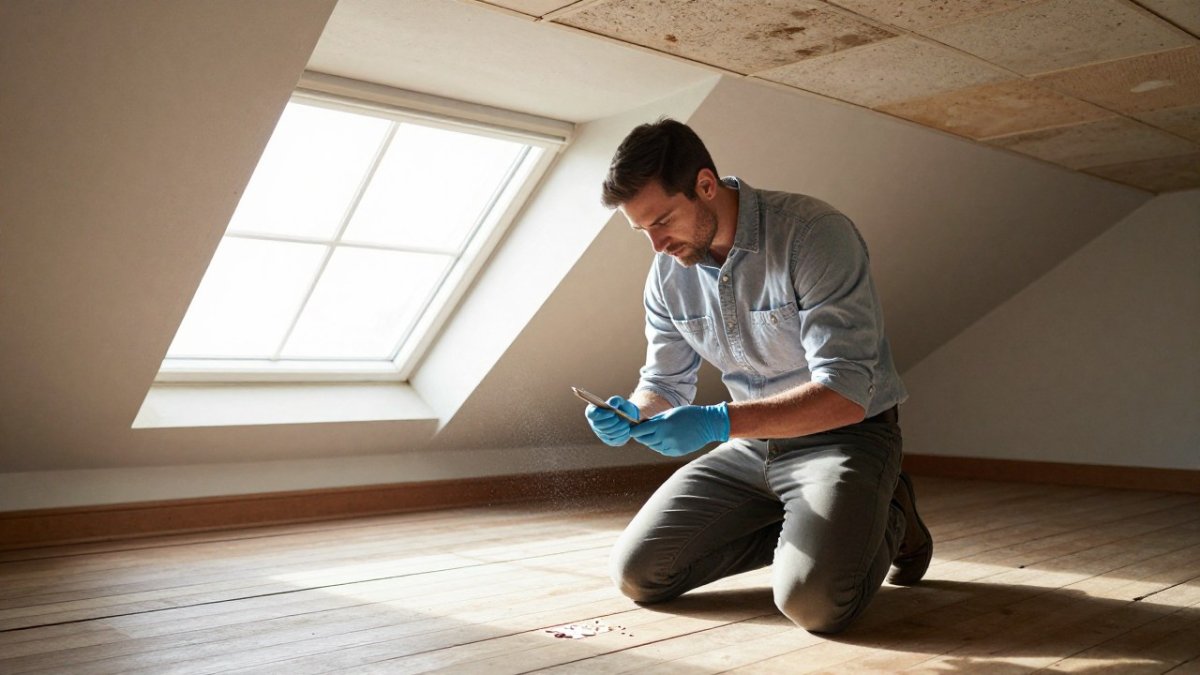
Testing comes before touching. The only reliable way to know whether a material contains asbestos is laboratory analysis of a sample. A visual inspection alone cannot confirm it.
Follow these steps:
Treat every suspect material as contaminated until proven otherwise.
Do not break, cut, or scrape a sample yourself.
Hire a trained inspector to collect samples properly.
Wait for the lab report before planning any work.
Federal guidance from the EPA asbestos program and the OSHA asbestos standards sets the baseline for how samples are handled and how workers are protected.
Testing usually takes days, not weeks, and the report tells you exactly which materials are affected. If you are unsure whether testing is required for your project, professional asbestos testing requirements explains when it is mandatory.
Asbestos Removal Safety: PPE, Containment, and Dust Control
The core principle of asbestos removal safety is simple: keep fibers out of the air and off your body. Everything below serves that goal.

Personal Protective Equipment
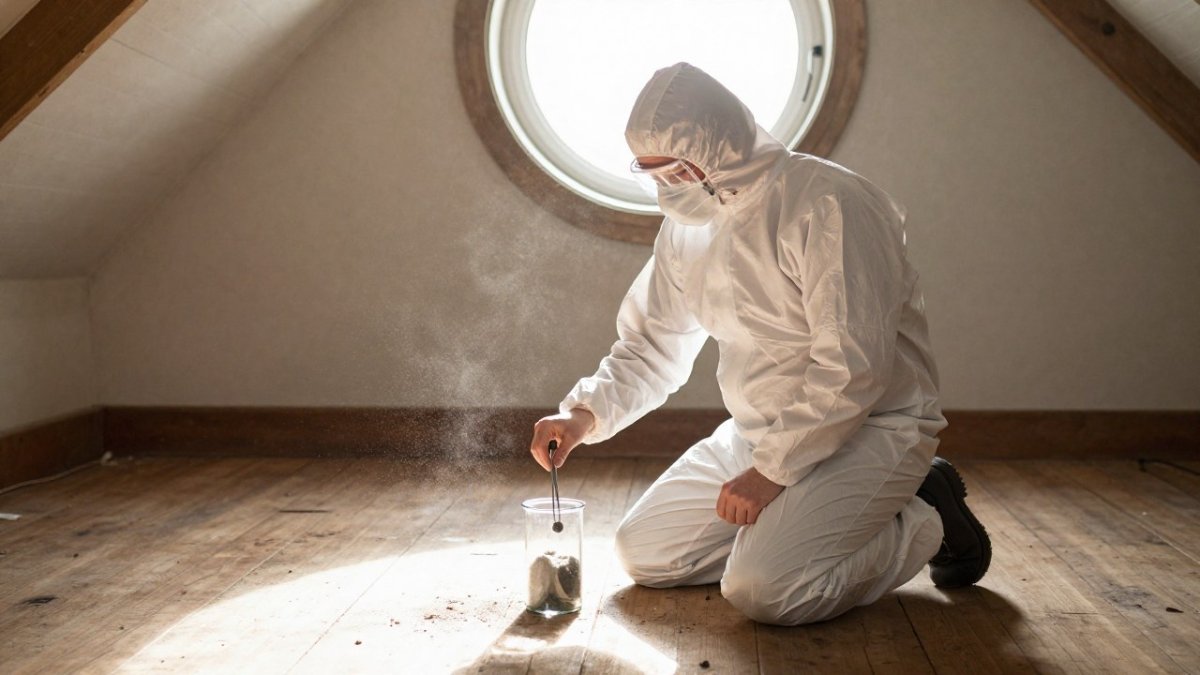
Personal protective equipment is the last line of defense, not the first. Wear it every time, even for a small job.
Disposable coveralls with a hood
A fitted respirator rated for fine particles
Goggles that seal against the face
A common mistake is a loose-fitting respirator. If it does not seal, it does nothing.
Setting Up the Work Area and Wet Methods
Containment keeps fibers from spreading through the building. Seal doorways and vents with plastic sheeting, and shut off forced-air systems.
Then use wet methods. Mist the material with a spray nozzle before and during handling. Wet fibers clump and stay down instead of going airborne. Keep the area damp, never soaked, and clean up as you go.
When to Hire a Licensed Asbestos Professional
Hire a licensed professional whenever the material is friable, the job is larger than a small repair, or the work falls under regulated removal rules. Friable material crumbles easily under hand pressure and releases fibers readily, which makes it far more dangerous.
Bring in a pro when:
The material is crumbling, damaged, or powdery
Removal involves more than a minor repair
The space is occupied or hard to seal off
To understand what happens once asbestos is confirmed, the step-by-step process after asbestos is found lays it out clearly.
Handling Friable and Non-Friable Materials During Removal
The two categories demand different handling. Friable material needs full containment and a licensed crew. Non-friable material, like cement board or intact floor tile, releases fewer fibers but still requires care.
For non-friable removal:
Keep the material intact as much as possible
Never break, saw, or grind it dry
Wet it and lower it, do not drop it
Careful handling matters more than speed. A slow, clean removal beats a fast, dusty one every time.
Asbestos Waste Disposal: Bagging, Labeling, and Transport
Asbestos waste is regulated at every step, from the moment it is wetted and bagged to the moment it is buried at an approved facility. The rules are not uniform across the country, and that is the part most guides skip. This section explains the handling chain and tells you exactly what to confirm with your state and local authorities before you haul anything.
The Waste-Handling Chain
Proper disposal follows a sequence. Skipping a step creates a leak, a labeling failure, or a paperwork gap that can turn a compliant job into an enforcement problem.
Wet and bag at the point of removal. Waste should be misted and placed directly into heavy-duty, leak-tight bags, typically 6-mil or thicker polyethylene, while still damp. Do not let debris dry out on the floor first.
Double-bag. Place the filled bag inside a second leak-tight bag and seal both. Sharp edges from cement board or tile should be wrapped or padded so they cannot puncture the plastic.
Label before moving. Each bag or container must be labeled as asbestos-containing waste. Use the warning language required by the applicable rules, commonly a label stating that the container contains asbestos fibers and that inhalation of the fibers is hazardous. Label the outside of the outer bag, not the inner one.
Seal and stage. Sealed bags go into a designated staging area inside the containment or a locked, labeled enclosure. Do not stack waste in occupied areas or near HVAC returns.
Transport in a covered vehicle. Waste moves in a covered truck or trailer, secured so bags cannot shift, tear, or fall out. Loose bags in an open pickup bed are a violation waiting to happen.
Deliver to an approved facility. Confirm in advance that the receiving facility accepts asbestos-containing waste and what paperwork it requires. Not every landfill or transfer station does.
Keep the receipts. Retain the disposal facility's receipt or waste manifest with the project records. This is your proof that the material went where it was supposed to go.
Why Local Rules Matter More Than General Advice
Disposal requirements for asbestos waste are set by a combination of federal, state, and local rules, and the state and local layers are often stricter than the federal baseline. The practical result is that the same bag of floor-tile debris may be handled differently in two neighboring jurisdictions.
Before any waste leaves the property, confirm the following with your state environmental agency and your local solid waste authority:
Whether a notification or permit is required. Some states require advance notice before abatement begins, and some localities require a separate disposal authorization.
Which facilities are approved. Approved asbestos disposal sites are limited, and the list changes. Call ahead and confirm the facility accepts the specific material type.
Packaging and labeling specifications. Some jurisdictions specify bag thickness, label wording, or container type beyond the general practice described above.
Watch Out Never place asbestos waste in standard household trash, recycling, or a construction dumpster. Loose debris in a regular trash bag endangers sanitation workers and can result in fines for illegal disposal.
What to Do If You Are Unsure
If you cannot confirm the local rules, stop and ask. Call the state asbestos program or the local health department and describe the material and the quantity. A five-minute phone call is cheaper than a fine, and far cheaper than a cleanup. When in doubt, hire a licensed abatement contractor who handles disposal as part of the scope, and get the disposal receipts in writing.
Proper asbestos waste disposal follows a fixed sequence from removal to the landfill.
Step | What to do |
1 | Wet and bag at the point of removal in 6-mil or thicker bags |
2 | Double-bag and seal both bags; pad sharp edges |
3 | Label the outside of the outer bag as asbestos-containing waste |
4 | Seal and stage in containment or a locked, labeled enclosure |
5 | Transport in a covered vehicle with bags secured |
6 | Deliver to an approved facility confirmed in advance |
7 | Keep the disposal receipt or waste manifest with project records |
Verifying Your Contractor and Confirming Clearance
Hiring the right crew is half the job; proving the work is actually clean is the other half. This section covers both, because a contractor who cannot document clearance is not finished, no matter how good the removal looked.
Verifying a Licensed Asbestos Professional
Licensing for asbestos abatement is handled at the state level, and requirements vary widely. Some states issue abatement contractor licenses through a dedicated asbestos program; others fold it into a general contractor or environmental remediation license. Before you sign anything, verify the following in writing:
License number and expiration date. Ask for the license number and confirm it directly with the issuing state agency, not just on the contractor's website. A lapsed license is a red flag.
Liability and workers' compensation insurance. Request a certificate of insurance naming you or the property owner as additional insured. Abatement work is high-risk; an uninsured crew can leave you holding the bill for a worksite injury or a botched containment.
Worker training records. Abatement workers and supervisors are required under OSHA asbestos standards to complete accredited training. Ask for proof that everyone on site, not just the owner, has current certification.
Watch Out A low bid is often a sign that containment, air monitoring, or proper disposal has been cut from the scope. Compare written scopes line by line, not just the bottom-line number.
What Post-Removal Clearance Actually Involves
Clearance is the independent verification that the work area is safe to reoccupy. It is not a visual once-over by the same crew that did the removal. A proper clearance process typically includes:
Visual inspection. The inspector confirms that no visible dust, debris, or residue remains on surfaces, ledges, or the containment plastic.
Air monitoring. Air samples are collected inside the containment or work area after final cleaning and analyzed for fiber concentration. The results are compared against the clearance criteria that apply to the project, often a strict limit far below typical occupational exposure levels.
Independent analysis. Samples are analyzed by a laboratory, not eyeballed on site. The written report is your proof that the area passed.
Documentation package. A complete closeout includes the clearance report, waste disposal receipts (manifest or non-hazardous waste shipping records), and a summary of materials removed. Keep this package with the property records, future buyers, lenders, and renovators will ask for it.
Key Takeaway Do not accept "it looks fine" as clearance. Ask for the written air-monitoring results and the disposal receipts before you release final payment. If the contractor cannot produce them, the job is not closed.
If you are still narrowing down candidates, how to find certified abatement contractors walks through the vetting process step by step.
Scheduling an Inspection Before Your Renovation Starts
An inspection before demolition is cheaper than a surprise during it. Testing before work begins tells you what is there, so the project can be planned around it instead of halted by it.
At Asbestos Buster, the team handles bulk, air, TEM, settled dust, vermiculite, and soil testing for homes and commercial properties throughout Nassau County and Long Island. If a renovation is on the calendar, schedule an asbestos inspection before renovating and start the work with clear answers.
Frequently Asked Questions
Can homeowners remove asbestos materials themselves?
In most cases, no. Federal rules do not ban a homeowner from touching material in their own single-family home, but many states and local jurisdictions require licensed abatement for certain work, and any material that is friable or likely to crumble should only be handled by a trained contractor. Removing asbestos safely means containment, wet methods, respirators, and leak-tight packaging, which most homeowners cannot set up correctly. If you are renovating a pre-1980s property in Nassau County or Long Island, get testing first and let a licensed professional handle anything that tests positive.
How do you test for asbestos, and how long do results take?
A trained inspector samples small pieces of suspect material, seals each in a container, and sends them to an accredited laboratory for analysis. Bulk samples are the standard for renovation planning, while air, TEM, settled dust, vermiculite, and soil testing cover other scenarios. Results usually come back within a few business days, though timelines depend on the lab. Do not break off a sample yourself: disturbing the material can release asbestos fibers into the air before anyone has confirmed what it is.
Which processes can release asbestos fibers into the air?
Any mechanical process that breaks, grinds, sands, cuts, drills, or scrapes asbestos-containing material can release airborne fibers. Common examples include sanding floor tile adhesive, sawing cement asbestos board or corrugated sheets, tearing out asbestos siding, and demolishing friable pipe insulation. Dry sweeping and compressed-air cleaning make it worse. Wet methods, careful handling, and containment reduce fiber release, but the safest approach is to confirm whether material contains asbestos before any tool touches it.
How should asbestos waste be handled and disposed of?
Asbestos waste must go into sealed, leak-tight containers, usually heavy-duty bags or wrapped bundles, labeled clearly as asbestos waste. Keep the material wet during handling, avoid breaking it into smaller pieces, and transport it in a covered vehicle to an approved disposal facility that accepts asbestos. Never put it in regular household trash or a construction dumpster. Local regulations vary on labeling, transport, and which facilities accept the waste, so confirm the rules with your local waste authority before removal begins.
Older buildings rarely announce their hazards. The right testing and a clear report turn guesswork into a decision you can defend. Asbestos Buster offers local expertise, accurate sampling, and reporting built for homeowners, contractors, and property managers who need to move forward with confidence. Get started with Asbestos Buster and know what is in your building before the first wall comes down.
Schedule an Inspection
Add asbestosbuster.com as a preferred source on Google →

Comments