
Where Asbestos May Be Hidden in Older Buildings

A material can look harmless for decades, then become a serious hazard when someone cuts, sands, scrapes, drills, or removes it. That is the central concern with asbestos in older buildings. Many asbestos-containing products were built to last, so they often remain in place long after their original installation.
Asbestos was once common in homes, schools, apartment buildings, factories, churches, and commercial properties across the United States. It appeared in materials that needed to resist heat, fire, moisture, wear, or chemical damage. In many cases, those materials are still hidden beneath flooring, above ceilings, inside walls, around pipes, or under roofing layers.
This article explains where asbestos may be found, why builders used it so widely, and why professional testing is essential before disturbing suspect materials. This information is educational only and should not replace guidance from a licensed asbestos inspector, abatement contractor, or local regulatory authority.

Asbestos became popular because it solved real construction problems
Asbestos is a naturally occurring mineral fiber. For much of the 20th century, manufacturers valued it because it performed well in harsh conditions. It could resist heat, slow the spread of fire, add strength to products, and improve durability.
In older construction, asbestos was often mixed into other materials rather than used by itself. That made it easy to add to many products, including cement, insulation, adhesives, floor tiles, ceiling textures, roofing, and wall materials.
Builders and manufacturers used asbestos because it offered several advantages:
Heat resistance Asbestos helped protect materials near pipes, boilers, furnaces, chimneys, ducts, and other heat sources.
Fire resistance Many buildings used asbestos-containing materials as part of fireproofing systems, especially in mechanical rooms, utility areas, and larger multi-unit or commercial buildings.
Strength and durability Asbestos fibers helped reinforce cement products, flooring, siding, and roofing materials.
Moisture and chemical resistance Some asbestos-containing products held up well in basements, kitchens, bathrooms, laundries, and industrial spaces.
Low cost and wide availability Asbestos was inexpensive and easy for manufacturers to use in mass-produced building materials.
The risks became clearer over time. When asbestos fibers become airborne and are inhaled, they can create serious long-term health hazards. The danger is greatest when asbestos-containing materials are damaged, crumbling, sanded, cut, demolished, or otherwise disturbed.
A key point often surprises property owners: asbestos is not always an immediate hazard when it is sealed, intact, and left alone. The risk increases when fibers can escape into the air.
Older buildings may contain asbestos in many hidden places
Asbestos is not limited to one room or one type of building. It may appear in residential, commercial, public, and industrial properties built or renovated before asbestos use declined in many building products.
A building does not need to look run-down to contain asbestos. Many materials were covered, painted, sealed, or layered under newer finishes. A renovated room can still have asbestos-containing materials beneath the surface.
Common hiding places include:
Flooring and underlayment
Pipe insulation and boiler insulation
Attic and wall insulation
Roof shingles and roofing felt
Cement siding and panels
Textured ceiling coatings
Drywall joint compound
HVAC duct insulation
Fireproofing materials
Adhesives, mastics, and sealants
Gaskets and packing materials in mechanical equipment
Age can provide a clue, but it cannot confirm the presence or absence of asbestos. Product appearance cannot confirm it either. Two materials can look nearly identical, while only one contains asbestos.
That is why visual inspection alone is not enough. Only proper sampling and laboratory analysis can confirm whether a suspect material contains asbestos.

Flooring materials can hide asbestos below the surface
Flooring is one of the most common places people encounter suspect asbestos materials during renovation. It may be found in visible flooring, under newer flooring, or in the adhesive used to install it.
Older floor systems often contain several layers. A modern laminate or ceramic tile floor may sit over sheet vinyl, older tiles, backing paper, or adhesive from an earlier installation.
Asbestos may be present in:
Vinyl floor tiles Older square tiles, particularly rigid vinyl or asphalt-based tiles, may contain asbestos.
Sheet vinyl flooring Some older sheet flooring had asbestos-containing backing, even when the top surface looks like ordinary vinyl.
Flooring underlayment Felt, paper, or backing layers beneath flooring may contain asbestos.
Leveling compounds Some older patching or leveling products used beneath flooring may contain asbestos.
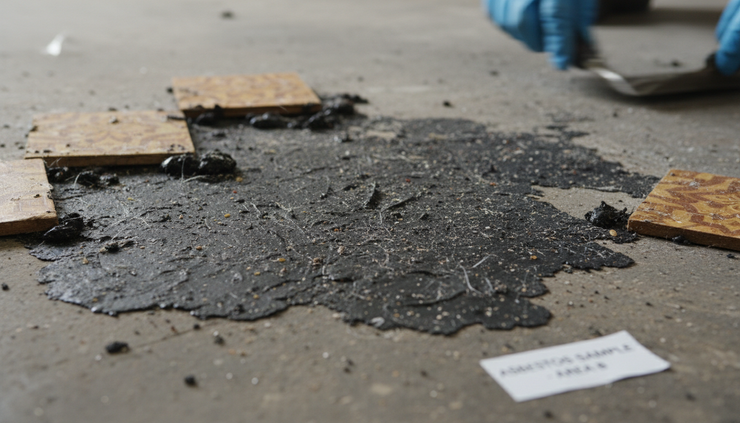
Adhesive residue Dark, tar-like, or black adhesive is often referred to as cutback mastic and may contain asbestos.
Flooring creates risk when it is removed using aggressive methods. Scraping, grinding, sanding, chipping, or breaking tiles can release dust. Pulling up sheet flooring can also disturb asbestos-containing backing or adhesive.
A safer approach begins with identification. If flooring is old, layered, brittle, or installed over unknown materials, testing should come before removal.
Insulation may contain asbestos around pipes, boilers, and attics
Insulation was one of the most important asbestos applications in older buildings. Asbestos resisted heat so well that it appeared near many mechanical and thermal systems.
Some asbestos insulation is easy to spot because it looks like an aged wrap around pipes. Other types are less obvious and may be hidden behind walls, above ceilings, or inside mechanical rooms.
Asbestos may be found in these insulation types:
Pipe insulation Older hot water, steam, and heating pipes may have a white, gray, or chalky wrapping. Elbows and joints may have a thicker molded covering.
Boiler and furnace insulation Older heating equipment may have asbestos-containing insulation, cement, panels, or coatings around high-heat areas.
Duct insulation Heating and cooling ducts may have asbestos-containing wrap, tape, or insulation near seams and joints.
Vermiculite attic insulation Some vermiculite insulation may be contaminated with asbestos. It often looks like lightweight, pebble-like material in gold, gray, or brown shades.
Wall and ceiling insulation materials Certain older fireproofing or insulation products in walls, ceilings, and structural areas may contain asbestos.
Insulation deserves special caution because damaged material can become friable. Friable means it can be crumbled, pulverized, or reduced to powder by hand pressure. Friable asbestos-containing material can release fibers more easily than hard, intact materials.
Warning signs include:
Crumbling or powdery insulation
Torn pipe wrap
Dust or debris below insulated pipes
Damaged boiler insulation
Loose material in attic spaces
Flaking or deteriorated fireproofing
Do not touch, sweep, vacuum, or bag suspect insulation. Standard household vacuums are not designed for asbestos fibers and can spread contamination. A licensed professional can evaluate the material and recommend the proper next step.

Roofing products and exterior materials may contain asbestos
Asbestos was also used on the outside of buildings. It helped roofing and siding products resist fire, weather, and wear. These materials can remain in service for many years, especially if they were installed in layers or covered during later repairs.
Possible exterior asbestos-containing materials include:
Roof shingles Some older cementitious or asphalt-based roofing shingles may contain asbestos.
Roofing felt and underlayment Hidden layers beneath shingles or built-up roofing may include asbestos-containing products.
Roof coatings and sealants Some older coatings, patching compounds, and flashing materials may contain asbestos.
Cement siding shingles Older fiber-cement siding shingles may contain asbestos and often have a rigid, brittle feel.
Soffit and fascia panels Certain cement board or panel products used on exterior trim areas may contain asbestos.
Roof and siding materials can become hazardous during removal, cutting, drilling, pressure washing, grinding, or storm damage cleanup. Even if the material is outdoors, unsafe work can create dust that settles on soil, tools, clothing, gutters, and nearby surfaces.
Professional evaluation is especially useful before roofing or siding replacement. Contractors may need to know whether asbestos is present before bidding, permitting, or planning removal. In some cases, local rules determine who can remove the material and how it must be handled.
Textured ceilings and wall finishes can contain asbestos
Textured ceilings were widely used because they hid imperfections, reduced glare, and gave rooms a finished look with less surface preparation. Some older texture compounds contained asbestos, especially in sprayed or troweled ceiling finishes.
Common suspect materials include:
Popcorn ceiling texture A rough, bumpy ceiling finish that may contain asbestos in older installations.
Sprayed-on acoustic texture Often used to reduce sound reflection in apartments, schools, offices, and other buildings.
Troweled ceiling texture Decorative patterns applied by hand may contain asbestos depending on the product and installation period.
Joint compound beneath paint or texture Drywall seams and patches may contain asbestos in older wall and ceiling systems.
Plaster finishes Some older plaster or finishing compounds may contain asbestos or be installed over asbestos-containing materials.
Textured ceilings are often safe when intact and painted. The risk rises when the texture is scraped, sanded, drilled, cut, or damaged by leaks. Water damage can also weaken ceiling texture and cause it to flake or fall.
Before removing a textured ceiling, testing is the responsible first step. This is especially true before remodeling projects that involve recessed lighting, ceiling fans, new HVAC registers, or demolition.
Mastic adhesives can remain hidden for decades
Mastic is an adhesive used to bond flooring, wall materials, and other products to a surface. In older buildings, some mastics contained asbestos. These adhesives can remain stuck to concrete, wood, or old flooring long after the visible material has been removed.
The most recognized suspect adhesive is black mastic, often seen beneath old vinyl tile or sheet flooring. Color alone does not prove asbestos is present, but black or dark brown adhesive in an older building deserves caution.
Mastic may be found under or behind:
Vinyl floor tiles
Sheet vinyl flooring
Carpet installed over older hard flooring
Wall panels
Cove base and trim
Ceramic tile or older resilient flooring
Multiple layers of remodeled flooring
Mastic becomes a concern when workers scrape, grind, sand, bead blast, or mechanically remove it. These methods can create fine dust. Chemical solvents can also create separate health and safety concerns if used without proper planning.
A professional can identify the adhesive, sample it safely, and explain removal or management options. Sometimes the safest plan is not removal. If the material is intact and will not be disturbed, a qualified professional may recommend encapsulation or covering it with a new approved layer, depending on local rules and project goals.
Professional testing should come before demolition or renovation
The safest time to identify asbestos is before work begins. Once demolition dust spreads, the problem becomes harder and more expensive to control.
Professional asbestos testing usually includes a site review, careful sampling, and laboratory analysis. A trained inspector knows how to take samples in a way that limits fiber release and avoids unnecessary damage. The lab report can confirm whether asbestos is present and may identify the type and amount in the sample.
Testing is especially wise before projects such as:
Removing old flooring
Scraping a popcorn ceiling
Replacing pipe insulation
Renovating kitchens or bathrooms
Replacing roofing or siding
Demolishing walls or ceilings
Upgrading HVAC systems
Repairing water-damaged materials
Converting basements, attics, or mechanical areas
If asbestos is confirmed, the next step depends on the material, condition, location, and planned work. Options may include leaving it undisturbed, encapsulating it, enclosing it, or using licensed abatement methods.
Avoid these common mistakes:
Do not assume a material is safe because it looks modern.
Do not assume a material contains asbestos based only on age or color.
Do not sand, grind, drill, or scrape suspect materials.
Do not use a household vacuum on asbestos debris.
Do not let untrained workers remove suspect materials without testing.
Do not throw suspect asbestos debris into regular trash without checking local requirements.
A cautious approach protects occupants, workers, and future property owners. It also helps prevent project delays if asbestos is discovered after work has already started.
The best approach is to identify before disturbing
Older buildings often contain layers of history. Some layers are visible, such as old tiles or ceiling texture. Others are hidden, such as mastic beneath flooring, insulation inside walls, or roofing felt under shingles. Because asbestos was valued for heat resistance, fire resistance, strength, and durability, it found its way into many building products.
The main takeaway is simple: do not disturb suspect materials until they have been properly evaluated. Flooring, insulation, roofing products, textured ceilings, and mastic adhesives all deserve careful attention in older buildings.
When a material is intact and left alone, it may not require immediate removal. When renovation, repair, or demolition is planned, professional testing provides the facts needed to choose the safest path forward. That small step can prevent airborne exposure, protect the building, and keep a project on solid ground.


Comments