
Why Get a Second Asbestos Inspection in 2026
Table of Contents
Why Get a Second Asbestos Inspection: The Case for Independent Verification
Signs of a Poor Asbestos Inspection and What a Second Look Catches
Red Flags in the First Report
Hidden Surfaces and Materials the First Pass Missed
Conflict of Interest: Why the Same Company Should Not Inspect and Abate
The Structural Problem, Not a Character Problem
What Independence Actually Looks Like
Why This Protects the Abatement Company Too
The Paper Trail That Matters Later
Asbestos Abatement Clearance Testing and Verification of Abatement Quality
What a Clearance Test Actually Measures
Cost-Benefit Analysis: What a Second Inspection Saves You
The Cost Side: What You Are Actually Buying
The Benefit Side: What a Missed Finding Triggers
The Asymmetry That Decides the Question
A Simple Way to Decide
Finding a Qualified Asbestos Tester Near Me: How to Vet Independently
Legal Obligations, Asbestos Register Maintenance, and Secondary Exposure Risks
Conclusion: When a Second Asbestos Inspection Is Worth It
Frequently Asked Questions
Last Updated: September 30, 2026
Why Get a Second Asbestos Inspection: The Case for Independent Verification
A second asbestos inspection is an independent review of a property that was already tested, and it exists because the first report is only as good as the person who wrote it. Homeowners and building managers across Nassau County and Long Island often ask us this. An inspection is a human judgment call, and judgment calls can miss things.
Key Takeaway A second asbestos inspection is not about distrust. It is about verification. You are confirming that the first report is complete, accurate, and safe to build your renovation budget on.
Signs of a Poor Asbestos Inspection and What a Second Look Catches
The clearest signs of a poor asbestos inspection are missing sample locations, vague material descriptions, and no mention of areas that were never accessed. Any one should make you pause before demolition starts.
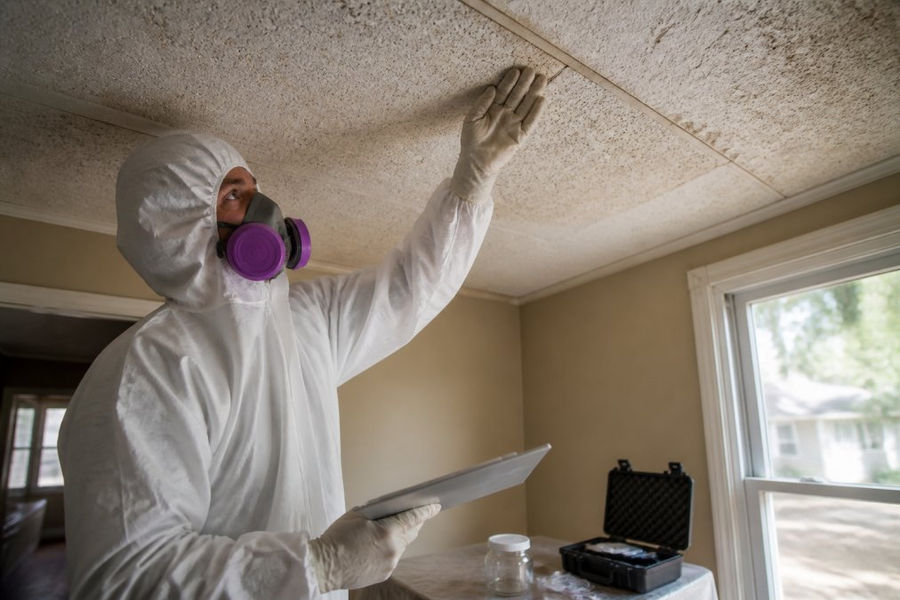
Red Flags in the First Report
A report that says "no asbestos found" without listing what was tested is not a report. It is a guess. Watch for these warning signs:
No sample count or location map
No photos of tested materials
Phrases like "visually appeared to be" with no lab backup
Entire rooms or crawl spaces left out
No mention of floor tiles, pipe wrap, or joint compound
Hidden Surfaces and Materials the First Pass Missed
Asbestos hides where nobody looks. A quick inspection tends to miss the same spots every time:
Mastic under vinyl floor tiles
Insulation inside wall cavities
Textured ceiling and wall coatings
Pipe and duct wrap in basements
Roofing felt and flashing
Vermiculite attic insulation
Conflict of Interest: Why the Same Company Should Not Inspect and Abate
The company that inspects your home should not be the company that removes the asbestos it finds. When one business does both, the incentive to pad the scope is built into the deal. This is the conflict of interest mitigation most homeowners never think about until it is too late, and the strongest argument for a second, independent inspection.
The Structural Problem, Not a Character Problem
This is not an accusation that abatement contractors are dishonest. It is a structural issue that shows up wherever the same party diagnoses a problem and sells the fix, a mechanic who inspects your brakes and quotes the repair, or a roofer who inspects for hail damage and files the claim. Most are honest. The system still rewards finding more.
What Independence Actually Looks Like
True independence is more than a promise. Look for these separations:
Financial separation. The inspector is not owned by, affiliated with, or receiving referral fees from an abatement contractor.
Scope separation. The inspector does not bid on the removal work described in their own report.
Clearance separation. The party who performs the post-abatement clearance test is not the party who did the removal.
Reporting separation. The report goes to you, not to a contractor who can edit the scope before you see it.
Why This Protects the Abatement Company Too
What most guides miss is that separation protects the removal contractor as much as the owner. A clean, independent inspection report gives the abatement team a defined scope to bid on, reducing disputes when hidden material turns up mid-job and someone has to eat the cost. It also shields the contractor from accusations that they invented findings to inflate the invoice.
Watch Out If your inspector also offers removal, ask who signs off on the clearance test. If the answer is "the same company," you have no independent verification of the work, and no way to prove the space was safe if a question arises later.
The Paper Trail That Matters Later
Independence is not just about the current job. It is about the record you keep. If a future buyer, lender, or regulator asks how the asbestos was handled, an inspection and clearance performed by parties independent of the removal crew is far stronger evidence than a self-certified report. That documentation can matter years after the work is finished.
Asbestos Abatement Clearance Testing and Verification of Abatement Quality
Asbestos abatement clearance testing is the process of confirming, after removal, that no airborne fibers remain above safe limits. It is the final checkpoint before a space is declared safe to reoccupy.
What a Clearance Test Actually Measures
A clearance test measures airborne fiber concentration in the work area after abatement and cleanup. It does not measure whether every scrap of material was removed. That is a separate visual inspection.
Three things make a clearance test trustworthy:
It is performed by a party independent of the removal crew
Air samples are analyzed properly, often by TEM
Results are documented in writing with pass or fail
Cost-Benefit Analysis: What a Second Inspection Saves You
A second asbestos inspection costs far less than the mistakes it prevents. The real question is not the fee but what a missed material costs you later. Here is the actual math, framed the way a building owner or homeowner should think about it.
The Cost Side: What You Are Actually Buying
A re-inspection is not a repeat of the first survey but a targeted verification. Depending on the property, it typically involves:
A document review of the first report for gaps and unsupported conclusions
A physical walkthrough of areas the first inspector skipped or could not access
Additional bulk sampling of suspect materials, sent to an accredited lab
A written comparison report noting what the first survey missed or mischaracterized
The Benefit Side: What a Missed Finding Triggers
A missed asbestos-containing material does not stay hidden forever. It surfaces at the worst possible moment, usually when a crew is already mid-demolition. The cost cascade looks like this:
Work stoppage. The job halts while the material is characterized and a scope is written.
Emergency abatement. Removal scheduled on short notice typically costs more than planned work, because crews are pulled from other jobs and the schedule is compressed.
Regulatory exposure. Improper handling of asbestos-containing waste can trigger citations and penalties under federal and state rules.
Disposal complications. Asbestos waste has specific packaging, labeling, and disposal requirements. Material that was already torn out and mixed with general debris is far harder to dispose of legally.
Schedule damage. A renovation that was supposed to take weeks can stretch into months, with carrying costs, lost rent, or delayed occupancy piling up.
Liability tail. This is the one that does not show up on the invoice. If occupants, workers, or future buyers are exposed, the claim can follow the owner for years.
The Asymmetry That Decides the Question
The cost of a re-inspection is bounded, you know the number before you start. The cost of a missed finding is unbounded, depending on when the material is discovered, who is exposed, and how the cleanup is handled. When one side of a decision has a fixed, known cost and the other an open-ended one, the rational move is to pay the small certain amount to reduce the large uncertain one.
A Simple Way to Decide
Ask three questions:
Was the first report detailed enough that you could hand it to a contractor and get a firm bid? If not, get a second look.
Did the first inspector have any financial interest in the removal work? If yes, get a second look.
Is the building old enough that hidden materials are likely? If yes, get a second look.
Key Takeaway The re-inspection fee is a known, fixed cost. The cost of a missed finding is unknown and open-ended. That asymmetry, not the size of the fee, is what makes the second look worth it.
Pricing depends on the size of the property and the scope of testing, so check with us for a quote rather than guessing.
Finding a Qualified Asbestos Tester Near Me: How to Vet Independently
When you search for an asbestos tester near me, the results all look the same. Vetting is what separates a real inspection from a rubber stamp.
Ask these questions before you hire:
Are you independent of any abatement company?
Which materials will you sample, and how many?
Do you use a certified lab for analysis?
What does the written report include?
Do you offer re-inspection surveys?
Pro Tip Ask for a sample report before you book. The format tells you more than any sales pitch. If it is vague, the inspection will be vague too.
Legal Obligations, Asbestos Register Maintenance, and Secondary Exposure Risks
Building owners carry legal obligations to identify and manage asbestos-containing materials, or ACMs, before any renovation or demolition. The dutyholder is legally responsible for managing that risk.
Conclusion: When a Second Asbestos Inspection Is Worth It
A second asbestos inspection is worth it whenever the first report was thin, the inspector also sells removal, or the building predates the mid-1980s. In those cases, independent verification is not paranoia, it is due diligence.
Frequently Asked Questions
What is the 3-5-7 rule for asbestos testing?
The 3-5-7 rule is a common industry guideline for air sampling: collect at least 3 samples for small projects, 5 for medium, and 7 for larger or more complex jobs. It helps ensure the results are representative of the space. For clearance testing after abatement, the exact number depends on the size of the work area and the applicable regulations. A qualified tester will confirm the required sample count before testing begins.
Can an asbestos inspection be wrong?
Yes. Inspections can miss asbestos-containing materials when the inspector does not sample hidden surfaces like floor tile mastic, pipe insulation behind walls, or textured ceilings. Reports can also be vague about which materials were tested versus assumed. A second asbestos inspection by a different company often catches these gaps, especially in homes built before the mid-1980s where multiple materials may contain fibers.
When is a re-inspection required after asbestos abatement?
Clearance testing is typically required after abatement before the area can be reoccupied or demolition can continue. This involves visual inspection and air sampling to confirm fiber levels are below the clearance threshold. Many regulators and project specifications also require an independent third party to perform the clearance test, so the abatement contractor is not verifying its own work. Check your project requirements and local rules for the exact standard that applies.
What if my house tests positive for asbestos?
A positive result does not automatically mean removal. If the material is in good condition and not disturbed, it can often be left in place and managed. If you are renovating or demolishing, the material must be handled according to regulations. Ask for a report that identifies each material, its condition, and its location. Then get a scope of work from a licensed abatement contractor and, ideally, a second opinion before committing to a removal budget.
Schedule an Inspection


Comments