
Asbestos Inspection vs Testing Key Differences Every Property Owner Should Know

Asbestos risk is often invisible until renovation, damage, or a property sale brings it to the surface. A ceiling tile may look harmless. A pipe wrap may seem old but stable. A sheet of vinyl flooring may have no warning label. The problem is that asbestos cannot be confirmed by sight alone.
That is where property owners often run into confusion. An asbestos inspection and asbestos testing are related services, but they do different jobs. One identifies potential asbestos-containing materials and risk conditions. The other confirms whether asbestos is actually present through laboratory analysis.
Knowing the difference helps prevent unsafe work, unnecessary disturbance, and costly guesses.

What a visual asbestos inspection includes
A visual asbestos inspection is a professional assessment of a property to locate materials that may contain asbestos. The inspector looks for suspect materials, evaluates their condition, and documents where they are found.
This may include:
Pipe insulation and boiler insulation
Vinyl floor tile and sheet flooring
Ceiling tiles and textured ceiling coatings
Roofing materials and siding
Cement board, wallboard, and joint compound
Duct wrap and fireproofing materials
The key word is suspect. A trained inspector can recognize materials that are commonly associated with asbestos, especially in older buildings, but visual review alone cannot prove the material contains asbestos.
A good inspection also looks at the condition of each material. Is it intact? Is it damaged? Is it crumbling, cut, scraped, or exposed to vibration? Materials in poor condition may release fibers more easily if they contain asbestos.
Inspection reports often include photos, room-by-room notes, material locations, and recommendations for next steps. In many cases, that next step is laboratory testing.
What asbestos testing confirms
Asbestos testing means collecting a sample of a suspect material and sending it to an accredited laboratory for analysis. The lab determines whether asbestos fibers are present and, in many reports, identifies the asbestos type and percentage.
Common lab methods include polarized light microscopy for bulk building materials. Other methods may be used for air samples or certain specialized materials. The right method depends on what is being tested and why.
Testing answers the question that visual inspection cannot answer with certainty:
Does this material contain asbestos?
A sample might be taken from a floor tile, pipe insulation, ceiling texture, wall compound, roofing material, or another suspect product. Because sampling disturbs the material, it should be done by a qualified asbestos professional using proper procedures. Property owners should not cut, scrape, drill, or break suspect materials to collect their own samples unless local rules clearly allow it and they understand the safety requirements.
Testing matters because many materials that look suspicious do not contain asbestos. At the same time, some materials that look ordinary may contain it. Lab results replace assumptions with evidence.
When an asbestos inspection is necessary
A visual inspection is often the best first step when a property owner needs to understand the scope of possible asbestos risk. It is especially useful when the building is older, has unknown materials, or will soon undergo work that may disturb surfaces.
Inspection is commonly needed before:
Renovation or demolition
Major plumbing, electrical, or HVAC work
Roof replacement or siding removal
Interior repairs after leaks, fire, or storm damage
Property purchase due diligence
Creating an asbestos management plan for a rental, commercial, or institutional property
For example, before remodeling a kitchen in a house built several decades ago, an inspection can identify suspect flooring, wall materials, and ceiling texture. That helps the owner avoid a contractor unknowingly cutting into or tearing out potentially hazardous materials.
A visual inspection is also useful when materials are staying in place. If suspect asbestos-containing materials appear intact and undisturbed, an inspector may recommend monitoring them rather than removal. In many cases, leaving stable asbestos-containing material alone is safer than disturbing it unnecessarily, as long as it is properly managed.

When asbestos testing is necessary
Testing becomes necessary when a decision depends on knowing whether asbestos is present. If a material will be disturbed, removed, repaired, or included in a regulatory scope of work, confirmation is usually needed.
Testing is especially important when:
Renovation work will cut, sand, grind, drill, or remove suspect material
Demolition is planned
A contractor needs documentation before starting work
Damage has exposed insulation, flooring, ceiling texture, or other suspect material
A buyer, seller, lender, or insurer requests confirmation
An earlier inspection found suspect materials but no samples were collected
A management plan requires material classification
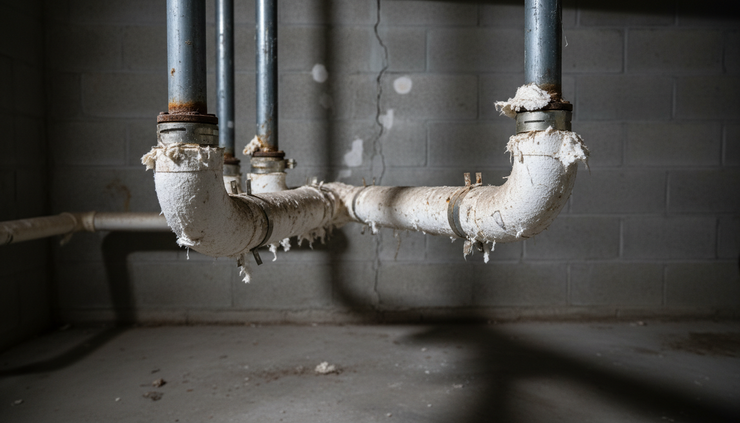
Consider a damaged basement pipe wrap. An inspection can document its location and condition. Testing can confirm whether the wrap contains asbestos. If it does, the owner can choose proper repair, encapsulation, enclosure, or abatement. If it does not, the repair path may be simpler.
Testing also helps prevent overreaction. Without lab results, a property owner may pay for unnecessary asbestos abatement or delay a project based on fear rather than facts.
How inspection and testing work together
The phrase asbestos inspection vs testing key differences can make the services sound like competing options. In practice, they work best as a sequence.
Inspection sets the map. Testing provides the proof.
A typical asbestos management process may look like this:
Review the property
A qualified inspector checks accessible areas and identifies suspect materials.
Document material condition
The inspector notes whether materials are intact, damaged, friable, or likely to be disturbed.
Select samples when needed
Samples are taken from representative suspect materials based on the project scope and applicable rules.
Analyze samples in a lab
The lab confirms whether asbestos is present.
Plan the right response
The owner, contractor, or asbestos consultant uses the findings to decide on monitoring, repair, encapsulation, removal, or project redesign.
This combined approach reduces guesswork. It also creates a clearer record for contractors, buyers, tenants, and regulators where documentation is required.

Key differences at a glance
Aspect | Asbestos inspection | Asbestos testing |
Main purpose | Finds and documents suspect materials | Confirms whether asbestos is present |
Method | Visual review and condition assessment | Sample collection and lab analysis |
Result | Inspection report with locations and recommendations | Lab report with analytical findings |
Best used when | Planning repairs, renovations, purchases, or management | Decisions require proof before work or removal |
Limitation | Cannot confirm asbestos by sight alone | Only applies to the sampled material |
Both services support safer property decisions. Inspection helps answer what might be present and where. Testing answers what the material actually is.
Why property owners should not rely on guesswork
Asbestos becomes a health concern when fibers become airborne and are inhaled. The greatest risk often comes from disturbing materials during renovation, demolition, drilling, sanding, or improper removal.
Guesswork can lead to two serious problems.
The first problem is unsafe disturbance. If asbestos-containing material is treated like ordinary debris, workers and occupants may be exposed to fibers. Contamination can also spread beyond the work area, making cleanup more complex.
The second problem is unnecessary cost. Treating every old material as asbestos without confirmation may lead to avoidable abatement expenses, project delays, and stress.
Professional inspection and testing help property owners make decisions based on evidence. They also help contractors understand what precautions are needed before work begins.
The safest decision starts with the right question
If the question is, “What suspect materials are in this building?” start with an asbestos inspection.
If the question is, “Does this specific material contain asbestos?” asbestos testing is the answer.
For many projects, the safest path includes both. A visual inspection identifies the materials that matter. Laboratory testing confirms the facts. Together, they give property owners a clear basis for renovation plans, repairs, real estate decisions, and long-term asbestos management.
When in doubt, pause before disturbing older building materials. A qualified asbestos professional can help determine whether inspection, testing, or both are needed before the work begins.


Comments