
7 Ways to Spot Asbestos Insulation in Your Attic
Last Updated: November 8, 2026
Quick Summary
Asbestos insulation in an attic usually looks like loose, pebble-like granules, often gray, gold-brown, or silvery, spread between ceiling joists. Many homes built before the mid-1980s have it, especially those using vermiculite insulation. Looks alone can't confirm it, so a lab test is the only reliable way to know.
Vermiculite is the most common attic form and looks like small, accordion-shaped pebbles.
Asbestos insulation may appear gray, blue-gray, gold-brown, tan, silvery, or white.
Homes built before the mid-1980s are the most likely to contain asbestos insulation.
Stop work and avoid disturbing the material, since fibers are most dangerous when airborne.
Only laboratory testing can confirm whether attic insulation contains asbestos.
Think your attic has asbestos?
Asbestos Buster provides lab-based testing and clear, accurate reports for Long Island homeowners.
Table of Contents
What Asbestos Insulation in an Attic Usually Looks Like
If you're staring up at your attic wondering whether that gray, lumpy material is asbestos, you're not alone. Asbestos insulation in an attic usually looks like loose, pebble-like granules, often gray, gold-brown, or silvery, spread between ceiling joists.

Here's the catch: looks alone can't tell you for sure. Plenty of harmless materials look nearly identical. Still, knowing the common appearance is a good first step.
Pebble-Like Vermiculite: The Most Common Attic Form
Vermiculite is the form homeowners run into most often. It was sold for decades under brands like Zonolite, and it's the material many people picture when they ask what asbestos insulation looks like in an attic.
Vermiculite is light and loose. It looks like small, accordion-shaped pebbles that crumble easily between your fingers. Because it pours and settles like sand, it tends to fill the spaces between joists in an even layer.
Watch out: vermiculite is often a mix. Not every bag of Zonolite-type product contained asbestos, so a lab test is the only way to know.
Colors, Textures, and Physical Appearance
Asbestos insulation comes in several colors. Common ones include:
Gray or blue-gray
Gold-brown or tan
Silvery or shiny flecks
White in some older products
Texture also helps. Loose-fill material feels gritty and light, and it may look fluffy or cotton-like in places. Pipe wrap and block forms look more solid, with a chalky or crumbly surface that may be cracked or damaged.
What Does Blown-In Asbestos Insulation Look Like?
Blown-in insulation is installed with a machine that sprays material into the attic. Blown-in asbestos insulation usually looks like loose, uneven fill rather than neat rolls or boards.
It often has a rough, irregular surface. Some pieces look like small clumps, while others look like fine, dusty granules. The layer may be uneven, with thicker spots near the attic hatch and thinner areas near the eaves.
Blown-in material is also easy to disturb. Walking across it or moving boxes can release fibers into the air, so keep your distance until you know what you have.
Asbestos Insulation Pictures: Visual Examples by Form
Photos help, but a picture alone rarely settles the question. Use images as a guide, then confirm with a professional sample.
Loose-Fill Vermiculite and Zonolite
Loose-fill vermiculite looks like shiny, gold-brown or gray pebbles. Zonolite products were widely sold in the United States, so many older attics contain them. The pieces are lightweight and often sparkle in a flashlight beam.
Pipe Wrap, Block, and Batt Insulation
These forms are found in different parts of the house:
Pipe wrap: white or gray material wrapped around pipes, often with cloth or paper covering that may be torn.
Block insulation: rigid, chalky blocks, often used around boilers and ducts.
Batt insulation: flat sheets or panels that may look like fiberglass but can contain asbestos.
Batt forms are the hardest to tell apart from modern materials, which is why testing matters.
How to Identify Asbestos Insulation Step by Step
This is the part most guides skip. What you actually need is a decision tree: a short sequence that tells you when to stop, who to call, and what not to do, whether you own the home, rent it, or are buying it. The steps below are ordered by safety, not by curiosity.
Step 1: Stop work and limit access
If you suspect asbestos insulation, the first move is to stop whatever you are doing. Do not sweep, vacuum, bag, or move the material (the EPA). Do not climb through the attic to inspect it more closely. Close the attic hatch or door and keep children and pets out. Asbestos fibers are most dangerous when they are airborne, and every one of those actions can put them there.
Watch out: a standard shop vac or household vacuum will spread fibers rather than capture them. Do not use one on suspected material, and do not sweep debris onto the floor below.
Step 2: Note what you can see from a safe distance
From the hatch, with a flashlight, record the form of the material: loose pebbles, fluffy loose fill, pipe wrap, block, or batts. Note the approximate depth and the color. Take photos from the hatch if you can do so without stepping into the attic. This information helps a professional scope the job and helps you ask better questions.
Step 3: Check the age of the home and the insulation
Homes built before the mid-1980s are the most likely to contain asbestos insulation, and vermiculite was sold into the 1980s. If you have renovation records, permits, or receipts, check them for insulation brands and dates. A newer layer of fiberglass on top of older material does not rule out asbestos underneath.
Step 4: Decide who to call based on your situation
Homeowners: Contact a licensed asbestos inspector or abatement professional. In many states, inspectors and abatement contractors are licensed separately, and some states require the inspector to be independent of the abatement company. Ask which licenses the firm holds and who will collect the sample.
Renters: Notify your landlord in writing and keep a copy. In most states, landlords are responsible for addressing hazardous conditions, and some states and localities have specific disclosure or repair timelines. If the landlord does not respond, contact your local health department or tenant authority.
Buyers: Ask the seller for any asbestos inspection reports and disclosure documents. A general home inspection is not an asbestos inspection, and most inspectors will flag suspected material without testing it. If the report flags insulation, make testing a contingency before closing.
Renovators: Test before any work that will disturb the attic, including electrical, HVAC, and insulation upgrades. Contractors who are not asbestos-trained can spread fibers through the house and create a much larger cleanup.
Step 5: Understand how professional sampling works
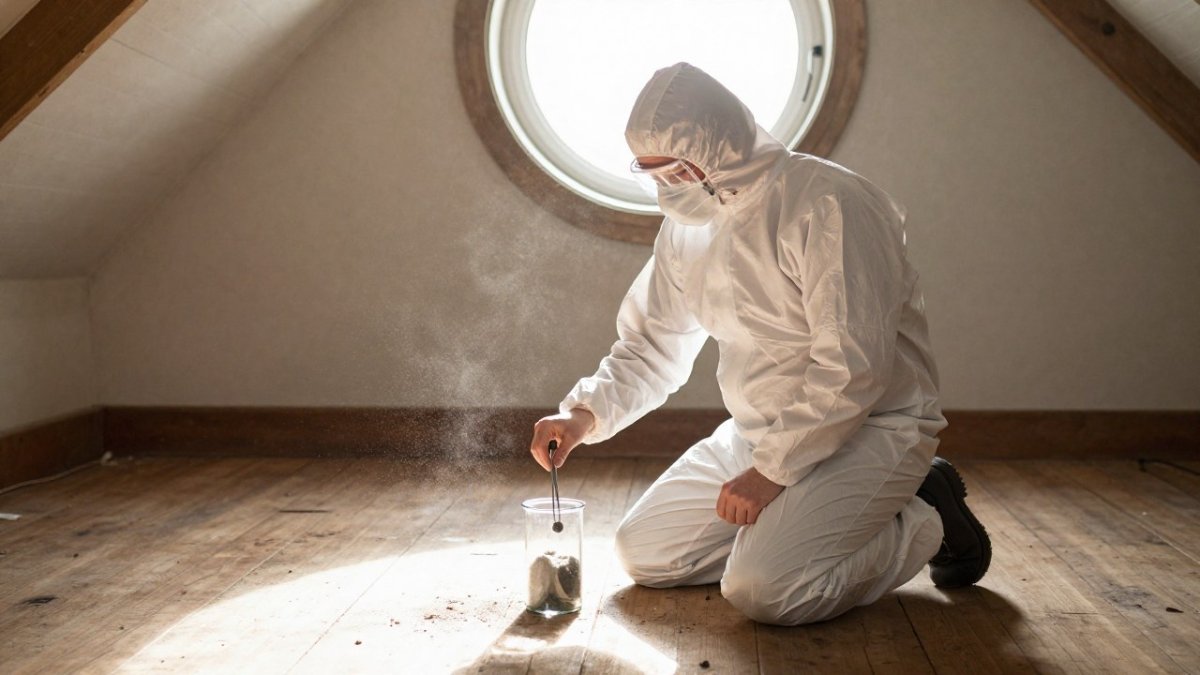
A professional sample is not a scoop into a bag. Inspectors take care to keep fibers contained and document where each sample comes from. Samples are often collected from different areas because asbestos can be present in one part of an attic and not another. The samples go to an accredited laboratory for analysis.
Step 6: Do not collect the sample yourself
DIY sampling is the most common mistake in this process. Homeowners who bag a sample and mail it in often disturb more material than they realize, and the result may not be representative of the whole attic.
Step 7: Plan next steps based on the result
If the lab confirms asbestos, the usual options are to leave the material undisturbed and manage it in place, encapsulate it, or remove it. Undisturbed asbestos insulation in a sealed attic is often left alone, but any renovation, air leak, or pest problem can change that calculation. If the result is negative, keep the report with your home records, because future buyers and contractors will ask for it.
What to ask an inspector before you book
Ask whether the firm is licensed in your state, which accredited lab will analyze the samples, and how the report will be delivered. A clear answer to those five questions separates a professional inspection from a quick visual walkthrough.
Look-Alikes: Fiberglass, Cellulose, and Mineral Wool Compared
Most attic insulation that worries homeowners is not asbestos at all.
Material | Typical Appearance | Texture and Behavior | Common Installation Era | Asbestos Risk |
Vermiculite | Gold-brown, gray, or silvery pebbles with a shiny, mica-like fleck | Lightweight, crumbles easily, pours and settles like sand between joists | Roughly 1920s through 1980s | Often contains asbestos; lab testing required |
Fiberglass | Pink, yellow, white, or green batts, rolls, or loose fill | Fibrous, springy, feels like spun glass; irritates skin on contact | Mid-20th century to present | Not asbestos |
Cellulose | Gray, brown, or off-white shredded paper, sometimes with visible ink flecks | Flaky, clumpy, dampens when squeezed; treated with fire retardants | Common from the 1970s onward | Not asbestos |
Mineral wool (rock or slag wool) | Off-white, gray, or greenish-brown fibrous fill or batts | Denser and stiffer than fiberglass; holds shape when compressed | Mid-20th century to present | Not asbestos, but older batches can contain other contaminants |
Loose-fill asbestos | White, gray, or blue-gray fluffy or granular material | Very light, dusty, clumps into soft tufts; may look cotton-like | Primarily pre-1980s | Confirmed asbestos risk |
Cellulose. Cellulose is shredded newsprint treated with fire retardants, so it usually reads as gray or brown flakes rather than pebbles or fibers.
Mineral wool. Rock wool and slag wool are denser than fiberglass and tend to hold their shape when squeezed.
The look-alike trap. A material can look suspicious and be harmless, or look ordinary and contain asbestos.
Watch out: do not pull back batts or dig into loose fill to compare layers.
Why Visual Identification Is Not Enough
Asbestos fibers are microscopic (Asbestos and Your Health). You can't see them with the naked eye, and most look-alikes can't be ruled out by appearance alone.
A lab test uses a microscope to check samples for asbestos fibers. Testing is the only reliable way to confirm what you have.
Ask any provider to explain their sampling process and how results are reported.
Loose Fill Asbestos Insulation: Where It Hides and Why Disturbance Matters
Loose-fill asbestos is often found in attics, but it can also sit in wall cavities, crawl spaces, and under floors. Anywhere it's been poured or blown in, it can hide out of sight.
The main concern is disturbance. When loose fill is walked on, cut into, or moved, fibers can enter the air. Renovations, electrical work, and even storing items in the attic can cause this.
If you plan any work that will touch the attic, test first. Identifying the material before work begins protects your family and any contractors you hire.
Booking Laboratory Testing for Your Attic Insulation
If your attic has gray, pebble-like, or fluffy insulation in a home built before the mid-1980s, the next step is laboratory testing. You can book a laboratory asbestos test to get your attic material properly sampled and analyzed.
Pricing depends on quantity, dates, and delivery, so contact Asbestos Buster directly for a current quote. Clear, accurate reporting helps you decide what to do next.
Asbestos Buster provides professional asbestos inspection and testing across Long Island. Contact the team to schedule an inspection before any attic work begins.
Frequently Asked Questions
How can I tell if my attic insulation is asbestos?
Visual clues alone cannot confirm asbestos. Loose-fill vermiculite is often pebble-like, gray, gold-brown, or silvery, but fiberglass, cellulose, and mineral wool can look similar. If your home was built before the mid-1980s and your attic has loose-fill or pipe wrap insulation, treat it as suspect and have a professional collect samples for laboratory analysis. Do not disturb the material to take samples yourself.
What does loose fill asbestos insulation look like in an attic?
Loose fill asbestos insulation, most often vermiculite sold under the Zonolite name, typically appears as small, lightweight, pebble-like granules. Colors range from gray and silver to gold-brown. The pieces often look accordion-shaped or shiny under light. Because other materials share these traits, lab testing is the only way to confirm the presence of asbestos.
Will 30 minutes of asbestos exposure hurt you?
Health risk depends on fiber concentration, duration, and frequency of exposure, so no single number settles the question. Brief, low-level disturbance is generally considered lower risk than repeated or prolonged exposure, but any disturbance of suspect material releases fibers. Stop work, keep people out of the area, and contact a qualified professional for testing and guidance on safe next steps.
How is attic insulation tested for asbestos?
A qualified inspector collects small bulk samples using careful containment methods, then sends them to an accredited laboratory, typically using polarized light microscopy. Results usually identify whether asbestos is present and its type. Homeowners should not collect samples themselves, because improper sampling can release fibers into the home. Asbestos Buster provides professional asbestos inspection and testing services; contact us for current pricing and scheduling.

Comments